Introduction
Every vehicle owner will eventually encounter suspension noises that signal potential problems with their car’s handling and safety systems. As automotive suspension specialists with over two decades of diagnostic experience, we’ve identified three distinct types of suspension sounds that account for approximately 85% of all suspension-related noise complaints received by professional service centers.
Understanding common suspension noises isn’t just about identifying annoying sounds – it’s about recognizing early warning signs that could prevent catastrophic failures, expensive repairs, and potentially dangerous driving situations. These automotive suspension sounds serve as your vehicle’s way of communicating critical information about component wear, lubrication failure, and structural integrity issues.
The three most common suspension noises we encounter daily are knocking and clunking sounds, squeaking and squealing noises, and grinding or scraping sounds. Each represents a different category of mechanical failure within your vehicle’s suspension system, requiring specific diagnostic approaches and repair strategies.
Common Suspension Noise #1: Knocking and Clunking Sounds
Acoustic Characteristics and Identification
Knocking suspension sounds represent the most frequently reported type of suspension noise in professional diagnostic centers. These deep, rhythmic impacts typically synchronize with suspension movement, becoming more pronounced over bumps, during cornering, or when the vehicle encounters road irregularities.
The clunking noise from suspension often exhibits these distinctive patterns:
- Intensity correlates directly with suspension load and movement frequency
- Sounds may be isolated to specific vehicle corners or occur systematically
- Noise typically increases with driving speed and road surface irregularity
- Often accompanied by noticeable changes in vehicle handling characteristics
Root Causes of Knocking Suspension Noises
Worn Shock Absorber Bushings: Deteriorated elastomeric bushings create excessive movement between shock mounting points and chassis attachment locations. This produces shock absorber knocking sounds that worsen progressively as rubber compounds age and lose their dampening properties.
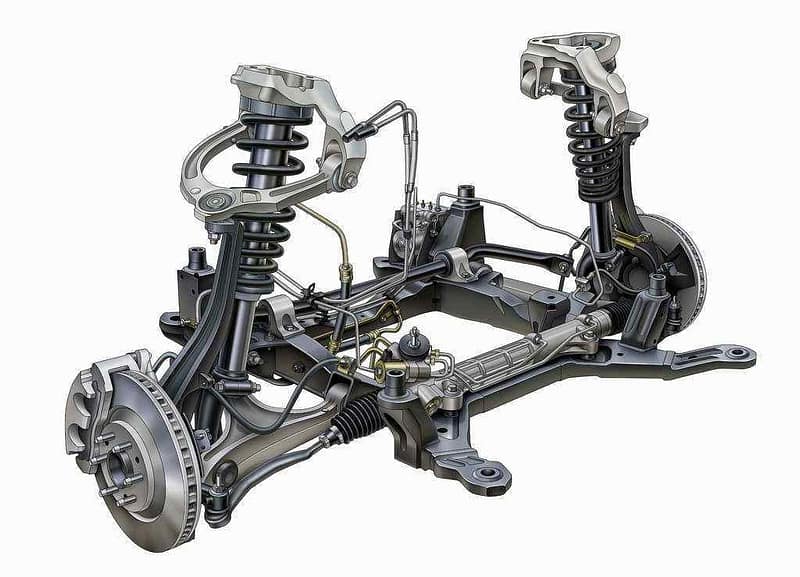
Strut Mount Assembly Failure: In MacPherson strut configurations, worn upper mount assemblies generate strut knocking noises during steering operations and vertical suspension travel. These components combine bearing, spring seat, and mounting functions in a single assembly.
Stabilizer Bar System Problems: Damaged sway bar end links produce characteristic suspension knocking during body roll and cornering maneuvers. These critical handling components connect the stabilizer bar to suspension components, and their failure significantly affects vehicle stability.
Loose Suspension Hardware: Corroded, improperly torqued, or failed mounting bolts create mechanical play that manifests as suspension rattling sounds during vehicle operation.
Internal Shock Absorber Damage: Component separation within shock assemblies creates internal suspension knocking as loose parts move within the housing during compression and rebound cycles.
Common Suspension Noise #2: Squeaking and Squealing Sounds
Sound Profile and Recognition Patterns
Squeaking suspension sounds represent the second most common category of automotive suspension noises encountered in professional service environments. These high-pitched, often continuous sounds may vary with temperature, humidity, or specific suspension movement patterns.
The suspension squealing noise typically exhibits these characteristics:
- Weather-dependent intensity variations affecting sound prominence
- Correlation with specific suspension movements like steering or braking
- Progressive worsening regardless of temporary treatment attempts
- Potential intermittent occurrence under specific operating conditions
Technical Analysis of Squeaking Causes
Bushing System Deterioration: Aged, contaminated, or inadequately lubricated rubber and polyurethane bushings create suspension bushing squeaks during normal articulation. Different bushing materials exhibit varying acoustic signatures:
- Natural rubber bushings tend toward lower-frequency squeaking
- Polyurethane components produce higher-pitched sounds
- Synthetic compounds may create intermittent squealing patterns
Dust Boot and Seal Compromise: Failed protective covers allow contaminant intrusion, accelerating internal corrosion and producing squeaky suspension sounds as components move against abrasive particles.
Lubrication System Failure: Dried or contaminated lubricants at suspension joints increase operational friction beyond design parameters, creating characteristic suspension squealing during compression and extension cycles.
Ball Joint Wear Patterns: Deteriorated ball joint assemblies generate joint squeaking sounds as spherical bearings operate with insufficient lubrication or excessive clearances.
Prevention and Early Intervention
Lubrication Maintenance: Regular application of appropriate lubricants prevents many suspension squeaking problems:
- Silicone-based lubricants for rubber component compatibility
- White lithium grease for metal pivot points requiring long-term protection
- Specialized suspension lubricants designed for specific component materials
Common Suspension Noise #3: Grinding and Scraping Sounds
Critical Sound Recognition
Grinding suspension sounds represent the most serious category of suspension system noises due to their indication of advanced component failure and immediate safety implications. These harsh, abrasive sounds suggest direct metal-to-metal contact within suspension components.
The scraping suspension noise exhibits these critical characteristics:
- Continuous occurrence regardless of road surface conditions
- Progressive intensity increase over short operational periods
- Correlation with noticeable handling degradation and vehicle instability
- Often accompanied by visible component damage or hydraulic fluid leakage
Advanced Failure Analysis
Complete Seal System Breakdown: Total hydraulic fluid loss in shock absorbers exposes internal metal components to direct contact without adequate lubrication, creating severe grinding suspension sounds.
Extreme Bushing Deterioration: Completely worn bushings allow metal suspension components to contact directly, producing characteristic scraping sounds during normal articulation.
Ball Joint Destruction: Advanced ball joint wear with complete lubrication loss creates metal-on-metal contact producing grinding joint sounds during steering input and suspension movement.
Spring System Failures: Broken or improperly seated coil springs contacting other suspension components create metallic scraping sounds during compression cycles.
Emergency Response Protocols
Immediate Safety Assessment: Grinding suspension problems require urgent evaluation:
- Immediate reduction in driving speed and aggressive maneuvering
- Professional inspection within 24 hours of sound development
- Avoidance of highway speeds until professional diagnosis completion
Component Replacement Requirements: Unlike other common suspension noise types, grinding sounds typically indicate damage beyond repair, requiring complete component replacement.
Professional Diagnostic Methodologies
Advanced Testing Equipment
Digital Acoustic Analysis: Professional facilities utilize sophisticated diagnostic tools for suspension noise identification:
Electronic Stethoscopes: Precision instruments isolate specific component sound sources from ambient vehicle noise and other mechanical systems.
Spectrum Analyzers: Advanced electronic sensors detect frequency patterns corresponding to different suspension failure modes and component wear conditions.
Systematic Isolation Procedures
Component-Specific Analysis: Professional mechanics employ proven diagnostic sequences:
Individual Corner Testing: Isolating each vehicle corner through manual cycling helps identify specific sources of suspension noise complaints.
Load Variation Analysis: Systematic weight changes reveal load-dependent sound characteristics indicating specific component problems.
When Professional Help Becomes Essential
Critical Warning Indicators
Immediate Professional Attention Requirements:
- Any grinding suspension sounds indicating dangerous metal-to-metal contact
- Progressive noise worsening over short operational periods
- Multiple suspension sound types occurring simultaneously
- Handling changes accompanying any category of suspension noise development
Professional Service Advantages
Specialized Diagnostic Capabilities: Professional facilities offer comprehensive suspension analysis:
- Access to testing equipment unavailable to consumer-level diagnosis
- Technical expertise distinguishing between similar sound patterns
- Integrated safety evaluation including complete vehicle dynamics assessment
Cost-Benefit Analysis: Early professional intervention typically provides significant economic advantages by preventing cascading failures and emergency repair situations.
Executive Summary (500 words)
Vehicle suspension systems communicate critical information through three primary types of suspension noises that every driver should recognize and understand. Knocking and clunking sounds typically indicate structural problems including worn bushings, loose mounting hardware, or internal component damage requiring prompt professional attention to prevent safety hazards and expensive cascading failures.
Squeaking and squealing suspension noises generally represent friction-related issues stemming from inadequate lubrication, bushing deterioration, or environmental contamination. While less immediately dangerous than other suspension sound categories, these problems progress steadily and can lead to more serious failures if ignored. Early intervention through proper lubrication and component maintenance often resolves these common suspension problems cost-effectively.
Grinding and scraping suspension sounds represent emergency-level failures requiring immediate professional evaluation and typically complete component replacement. These critical suspension noises indicate metal-to-metal contact suggesting advanced wear, complete lubrication failure, or structural damage that compromises vehicle safety and handling characteristics.
Professional diagnosis provides the most reliable approach to suspension noise problems, offering specialized equipment, technical expertise, and safety evaluation capabilities unavailable through consumer-level assessment. Early recognition and appropriate response to these three common suspension noises enables proactive maintenance strategies preventing costly repairs while ensuring optimal vehicle safety and performance characteristics throughout the ownership experience.