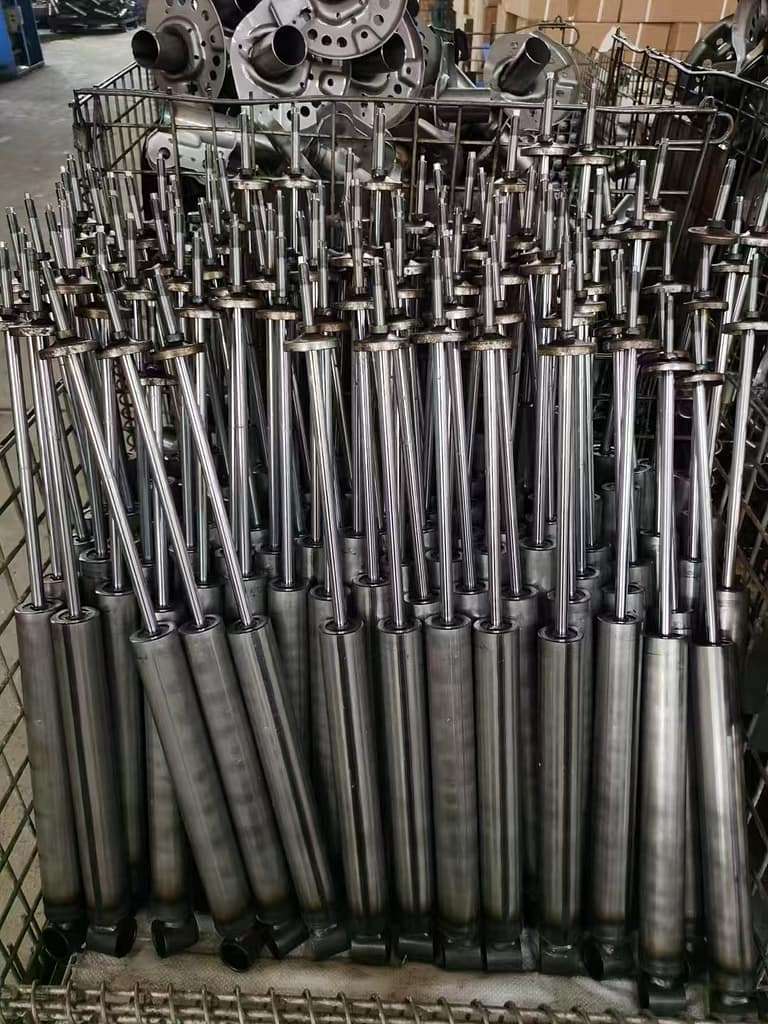
Introduction
As a leading shock absorber manufacturing facility with decades of engineering expertise, we understand the critical importance of identifying worn or defective shock absorbers before they compromise vehicle safety and performance. Through our extensive quality control processes, field testing programs, and analysis of returned units, we’ve identified four primary symptoms that consistently indicate shock absorber deterioration.
Shock absorbers represent one of the most hardworking components in your vehicle’s suspension system, continuously managing road impacts, controlling spring oscillations, and maintaining tire contact with the pavement. When these vital components begin to fail, they exhibit specific warning signs that every driver should recognize.
Our manufacturing facility produces shock absorbers meeting stringent OEM specifications and aftermarket quality standards. This production experience, combined with comprehensive field performance data, provides unique insights into how shock absorbers fail and the symptoms they exhibit throughout their service life.
Understanding Shock Absorber Function
Before examining the four primary symptoms, it’s essential to understand how shock absorbers function. These components control spring oscillations through hydraulic dampening, converting kinetic energy from wheel movement into thermal energy. This process involves forcing hydraulic fluid through precisely calibrated valves within the shock absorber body.
Our manufacturing process ensures each shock absorber meets strict quality standards for dampening coefficients, seal integrity, and structural durability. However, even high-quality shock absorbers eventually wear due to normal use, environmental factors, and constant stress from absorbing road impacts.
Symptom 1: Excessive Vehicle Bouncing and Poor Ride Quality
The Primary Indicator of Failure
The most recognizable symptom of worn shock absorbers is excessive bouncing after encountering road irregularities. When shock absorbers function properly, they should limit spring rebound to one complete cycle after impact. Defective units allow multiple bounces, creating an uncomfortable and potentially dangerous driving experience.
Technical Analysis from Manufacturing Perspective
In our quality testing laboratory, we simulate thousands of compression and extension cycles to replicate real-world wear patterns. Fresh shock absorbers demonstrate consistent dampening force throughout their stroke length. As internal seals deteriorate and hydraulic fluid leaks or becomes contaminated, the dampening coefficient decreases significantly.
Our engineering data shows shock absorbers typically lose 10-15% of their dampening capacity within the first 50,000 miles. By 80,000 miles, this degradation can reach 25-30%, resulting in noticeably poor ride quality. Internal components causing this symptom include:
- Worn piston seals: Allow hydraulic fluid bypass, reducing dampening force
- Degraded valve assemblies: Lose ability to properly regulate fluid flow
- Contaminated hydraulic fluid: Contains debris affecting viscosity
- Gas charge depletion: Nitrogen pressure loss reduces performance
Diagnostic Methods
The bounce test remains the most effective diagnostic method. Push down firmly on each vehicle corner and release quickly. Quality shock absorbers should stop bouncing within one complete cycle. Continued oscillation indicates internal component failure requiring immediate replacement.
Performance Impact
Excessive bouncing affects numerous vehicle systems beyond ride comfort. Poor shock absorber performance compromises braking distances, reduces steering precision, and accelerates tire wear. Our engineering data shows worn shock absorbers can increase stopping distances by up to 20% under emergency conditions.
Symptom 2: Visible Fluid Leaks and Physical Damage
Identifying Leak Indicators
Hydraulic fluid leakage represents a definitive sign of shock absorber failure easily identifiable through visual inspection. Our manufacturing process includes rigorous seal testing, but normal wear eventually compromises sealing components. Visible oil stains around the shock absorber body or mounting points indicate internal seal failure.
Leakage Pattern Types
Different shock absorber designs exhibit varying leakage patterns:
- Traditional hydraulic shocks: Leak hydraulic oil from piston rod seals
- Gas-charged units: May release both oil and pressurized gas
- Twin-tube designs: Often show leakage between inner and outer tubes
- Monotube systems: Typically leak from primary piston rod seals
Physical Damage Assessment
Visual inspection should identify physical damage affecting performance:
- Dented shock absorber bodies: Restrict internal piston movement
- Damaged mounting hardware: Affects proper alignment
- Corroded piston rods: Compromise seal integrity
- Bent orientations: Indicate impact damage or worn bushings
Quality Control Perspective
Our production facility implements multiple quality checkpoints to minimize premature failures. However, external factors including road salt exposure, extreme temperatures, and impact damage can compromise even high-quality components. Regular visual inspections help identify developing issues before complete failure.
Symptom 3: Uneven Tire Wear Patterns
Shock Performance and Tire Longevity Connection
Defective shock absorbers create irregular tire contact patterns, resulting in premature and uneven tire wear. Our engineering analysis demonstrates that properly functioning shock absorbers maintain consistent tire-to-road contact pressure, maximizing tread life and improving traction characteristics.
Specific Wear Pattern Identification
Worn shock absorbers produce distinctive tire wear patterns:
- Cupping or scalloping: Circular wear patterns indicating wheel bounce
- Center wear: Excessive wear in tire centers from inadequate dampening
- Edge wear: Uneven wear on tire edges from lateral movement issues
- Feathering: Diagonal wear patterns across tread blocks
These patterns develop when inadequate dampening allows tires to bounce across road surfaces rather than maintaining smooth, consistent contact.
Technical Correlation Data
Our laboratory testing shows direct correlation between shock absorber degradation and tire wear acceleration. Vehicles with 50% shock absorber efficiency loss experience up to 35% faster tire wear rates compared to properly functioning suspension systems.
Economic Impact
Premature tire replacement due to worn shock absorbers creates significant long-term costs often exceeding shock absorber replacement expenses. Maintaining proper suspension function extends tire life, improves fuel economy, and prevents additional component damage.
Symptom 4: Degraded Steering Control and Vehicle Stability
Steering Response Characteristics
Worn shock absorbers significantly impact steering precision and vehicle stability during cornering, braking, and emergency maneuvers. Our testing protocols evaluate steering response under various dynamic conditions to establish performance benchmarks.
Poor Steering Control Manifestations
Drivers experience several steering-related symptoms when shock absorbers fail:
- Increased steering effort: Poor dampening requires greater directional input
- Reduced steering feedback: Worn shocks filter out road surface information
- Vehicle wandering: Poor stability during straight-line driving
- Excessive body roll: Inadequate lateral stability during cornering
- Nose-diving during braking: Front-end dips excessively under deceleration
- Rear-end squatting: Vehicle rear drops under acceleration
Safety Implications
Degraded steering control poses serious safety risks during emergency situations requiring quick directional changes. Our safety analysis indicates vehicles with worn shock absorbers require significantly longer reaction times and greater steering corrections for directional control.
The progressive nature of shock absorber deterioration means drivers often gradually adapt to reduced performance without realizing safety implications until emergency situations reveal performance degradation extent.
Dynamic Stability Testing
Our manufacturing facility conducts extensive dynamic stability testing ensuring shock absorbers meet stringent performance criteria. Tests simulate real-world conditions including high-speed stability, emergency lane changes, panic braking, and cornering stability assessment.
Professional Diagnostic Approaches
Comprehensive Inspection Procedures
Professional shock absorber evaluation requires systematic inspection beyond the four primary symptoms. Our technical training programs emphasize thorough diagnostic procedures including visual inspection, bounce testing, road testing, and specialized equipment analysis.
Modern Diagnostic Equipment
Advanced service facilities utilize sophisticated testing equipment:
- Shock absorber dynamometers: Measure exact dampening force curves
- Suspension geometry analyzers: Verify component relationships
- Vibration analysis equipment: Identify frequency response issues
- Electronic diagnostic systems: Evaluate adaptive suspension components
Manufacturing Quality and Recommendations
Production Excellence
As shock absorber manufacturers, we implement comprehensive quality control throughout production. Every component undergoes rigorous testing including pressure testing, dynamic performance evaluation, and durability cycling ensuring consistent performance and longevity.
Replacement Timing
Based on manufacturing experience and field performance data, we recommend shock absorber inspection every 50,000 miles with replacement typically required between 75,000-100,000 miles, depending on driving conditions. Severe service conditions may require more frequent replacement.
Maintenance Best Practices
Proactive maintenance significantly extends shock absorber life:
- Visual inspections every 12,000 miles for leaks and damage
- Professional evaluation every 50,000 miles
- Immediate attention to warning symptoms
- Quality replacement components using OEM specifications
Conclusion
Recognizing the four primary symptoms of worn shock absorbers—excessive bouncing, visible fluid leaks, uneven tire wear, and degraded steering control—enables proactive maintenance enhancing vehicle safety and performance. As manufacturing experts, we emphasize regular inspection and timely replacement importance.
Our commitment to engineering excellence ensures replacement shock absorbers provide reliable, long-lasting performance under diverse operating conditions. When these symptoms appear, prompt professional diagnosis and quality component replacement restore vehicle safety, comfort, and performance to original specifications while preventing costly secondary damage to related suspension components.