Introduction
A smooth, controlled ride is one of the hallmarks of a well-maintained vehicle. When you hit a bump on the road, you expect your car or truck to absorb it and settle back to a stable, level position. This comfort and stability are largely thanks to a crucial, yet often overlooked, component: the shock absorber, or simply, “shocks.” However, when these vital parts wear out, you’ll notice the first signs—a bouncy ride, excessive body roll in corners, or even “nose-dive” when braking. This inevitably leads every car owner to the same critical question: How much to replace shocks?
The answer, while seemingly straightforward, is deceptively complex. The cost of shock replacement isn’t a single, fixed number. It varies dramatically based on your vehicle’s make and model, the type of shocks you choose, and labor rates in your area. As a factory-direct supplier with decades of experience in suspension components, we’ve seen firsthand how this confusion can lead to overpaying for unnecessary upgrades or, conversely, selecting substandard parts that compromise safety.
This guide is designed to cut through the noise and provide a clear, comprehensive breakdown of shock replacement costs. We will explore the factors that influence the price, detail the average costs for different vehicle types, compare parts tiers (from budget to premium), and explain how labor can impact your final bill. By the end of this article, you will be equipped with the knowledge to make an informed decision, ensuring you get the best value and performance for your investment without sacrificing safety.
Core Content
Section 1: Understanding the True Function of Shocks
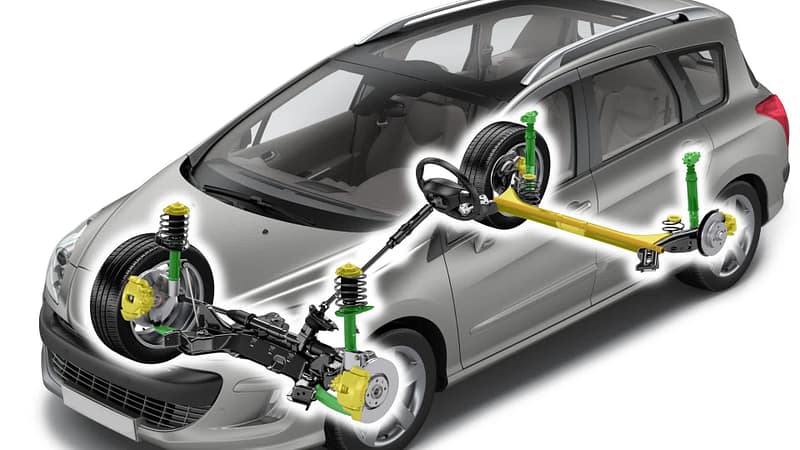
Before we dive into the costs, it’s essential to understand exactly what you’re paying for. A common misconception is that shocks support the weight of the vehicle. In reality, that job belongs to the springs. Shock absorbers, or dampers, have a single, critical function: to control the motion of the springs.
Imagine your car’s suspension springs as powerful coils. When you hit a bump, the springs compress to absorb the impact. Without shocks, the springs would continue to rebound and oscillate, making the car bounce uncontrollably like a pogo stick. The shock absorbers slow down this spring movement, ensuring the tire maintains constant contact with the road. This provides:
- Safety: Properly controlled tire contact is vital for braking, accelerating, and cornering.
- Comfort: It dampens road vibrations, providing a smooth ride.
- Stability: It prevents the vehicle from leaning excessively in corners or diving forward when the brakes are applied.
Over time, the internal components of a shock—most notably the hydraulic fluid and valves—wear down, losing their ability to dampen effectively. This is when replacement becomes necessary for both safety and performance.
Section 2: The Core Variables That Determine Shock Replacement Cost
The price tag for a shock replacement isn’t arbitrary. It’s a result of several key factors that our factory analyzes to produce and price components accurately.
1. Vehicle Type and Model This is arguably the most significant factor. A shock for a compact sedan, a full-size truck, and a high-performance sports car are three completely different products designed for vastly different loads, driving conditions, and performance expectations.
- Economy Cars (e.g., Toyota Corolla, Honda Civic): These vehicles are designed for comfort and efficiency. Their shocks are generally simple, durable, and less expensive. They experience less stress, so replacement intervals are longer.
- Trucks & SUVs (e.g., Ford F-150, Jeep Wrangler): These vehicles are heavier, often carry heavy loads, and are frequently driven on rough terrain. Their shocks are built for strength and durability but experience more stress, leading to a shorter lifespan. The components are also generally larger and more robust, increasing cost. Furthermore, many trucks and SUVs require specialized shocks, like those for heavy-duty towing or off-roading.
- Luxury & Performance Vehicles (e.g., BMW, Mercedes-Benz, Audi): These cars use advanced, adaptive, and electronically controlled shock absorbers. These systems are far more complex than traditional hydraulic shocks and require specialized diagnostic tools and programming during installation, significantly increasing both parts and labor costs.
2. Parts Tier: From Budget to Premium Not all shocks are created equal. They are manufactured to different standards, and this directly impacts their performance, durability, and price.
- Standard/OEM (Original Equipment Manufacturer) Quality Shocks: These are the direct replacement parts for what came on your vehicle from the factory. They are engineered to meet the original specifications for a balance of cost, comfort, and durability. They are the most common choice for a standard replacement. As a factory, we produce numerous lines of standard shocks, which provide a reliable baseline performance and price point.
- Premium/Performance Shocks (e.g., Bilstein, KYB MonoMax, Rancho): These brands are synonymous with higher performance. They use superior materials, advanced valving technology, and are often gas-charged instead of using hydraulic fluid. This provides improved response, better stability, and enhanced damping characteristics. They are a popular choice for drivers who tow frequently, enjoy spirited driving, or drive on rough roads. The cost can be 50-100% more than standard shocks.
- Off-Road & Heavy-Duty Shocks (e.g., Fox, King, Old Man Emu): Designed for extreme conditions, these shocks feature immense strength, longer travel, and specialized valving to handle the abuse of rock crawling, desert racing, or constant heavy payloads. They are the most expensive category and are essential for modified vehicles or those used in severe work applications.
- Adaptive/Smart Shocks: Found on high-end luxury and performance vehicles, these shocks adjust their damping characteristics in real-time based on road conditions and driver input. They are the most technologically advanced and, consequently, the most expensive to replace.
3. Labor Costs: The Hidden Factor In most cases, replacing shocks is a labor-intensive job that requires specialized tools and expertise. This is the second major component of the total cost. Labor rates vary significantly:
- Geographic Location: Labor rates in major metropolitan areas are substantially higher than in rural or less populated areas. A shop in New York or Los Angeles will charge significantly more per hour than one in a smaller town.
- Type of Repair Shop: Dealership labor rates are almost always the highest. Independent repair shops are generally more affordable, and specialized performance or tire shops may offer competitive pricing for shock replacements.
- Vehicle Complexity: As mentioned, a car with simple shocks is much cheaper to service than a luxury vehicle requiring computer programming for its adaptive suspension system.
Section 3: A Detailed Breakdown of Shock Replacement Costs
To put these factors into perspective, let’s break down the estimated costs for different scenarios. These figures include both parts and labor and represent a national average.
Scenario 1: Standard Replacement on a Typical Mid-Size Sedan (e.g., Toyota Camry, Honda Accord)
- Parts Cost (4 shocks): 300−300 – 300−600 for a set of standard, quality shocks from a reputable manufacturer.
- Labor Cost (2-wheel): 100−100 – 100−250. The job is straightforward on a vehicle with easy-to-access shocks.
- Total Estimated Cost: 400−400 – 400−850. This is the most common scenario for average car owners.
Scenario 2: Premium Replacement on a Luxury SUV (e.g., Ford Explorer)
- Parts Cost (4 shocks): 600−600 – 600−1,200+ for a set of premium, gas-charged shocks designed for improved handling and load-carrying capability.
- Labor Cost (4-wheel): 200−200 – 200−400. SUVs are heavier, and shocks can be more difficult to access.
- Total Estimated Cost: 800−800 – 800−1,600+.
Scenario 3: Heavy-Duty Replacement on a Full-Size Truck (e.g., Ram 2500)
- Parts Cost (4 shocks): 600−600 – 600−1,500+. For a heavy-duty or off-road shock, the price is justified by the ability to handle massive loads and extreme conditions.
- Labor Cost (4-wheel): 250−250 – 250−500. The weight and size of the vehicle make the job more physically demanding, and it often requires specialized tools to compress the springs safely.
- Total Estimated Cost: 850−850 – 850−2,000+.
Scenario 4: Complex Adaptive Shock Replacement on a Performance Sedan (e.g., BMW 5 Series)
- Parts Cost (4 shocks): 1,500−1,500 – 1,500−4,000+. The shocks themselves are a complex electronic component. Genuine OEM parts are extremely expensive.
- Labor Cost (4-wheel): 400−400 – 400−800. This is the most expensive part of the job. It requires a skilled technician, specialized diagnostic scanners, and potentially software coding or programming to calibrate the new shocks to the vehicle’s computer system.
- Total Estimated Cost: 1,900−1,900 – 1,900−4,800+.
Section 4: Tips for Saving Money on Shock Replacement
While shocks are a critical safety component, there are smart ways to manage the cost without sacrificing quality.
1. Get Multiple Quotes Never go with the first price you’re quoted. Contact at least three different shops—a dealership, a local independent mechanic, and a tire shop. This will give you a clear idea of the fair market rate for both parts and labor in your area.
2. Choose Quality Aftermarket Parts While OEM parts are a safe bet, high-quality aftermarket brands often offer superior performance and durability for a similar or lower price. As a factory that produces both OEM and aftermarket lines, we can attest to the performance value found in well-engineered, non-OEM options. Look for brands with a strong reputation for reliability.
3. Consider a Complete Suspension Refresh If one shock is worn, the others are likely not far behind. It’s almost always more cost-effective in the long run to replace all four shocks at once. While you’re at it, if your mechanic is already disassembling the suspension, ask for a quote on replacing related components like control arm bushings or strut mounts. Doing this work at once can save on labor costs down the line.
4. Do It Yourself (DIY) – With Caution If you are a skilled and experienced DIYer, replacing shocks on many cars is a manageable project. It can save you a significant amount in labor costs. However, this is not recommended for beginners or for vehicles with complex air or adaptive suspension systems. Improper installation can be dangerous. Always follow a detailed repair manual for your specific vehicle model.
Conclusion
Determining how much it costs to replace shocks requires looking beyond a single number and understanding the interplay of vehicle type, parts quality, and labor complexity. From a standard shock replacement on a family sedan costing a few hundred dollars to a high-end adaptive system on a luxury car costing nearly five thousand, the spectrum is vast. However, the one constant is the critical importance of this maintenance task.
Worn shocks compromise your vehicle’s safety, handling, and braking performance. They are not a part to be overlooked or deferred. By following the guidelines in this guide—understanding the function of your shocks, breaking down the cost variables, getting multiple quotes, and choosing quality parts—you can make a confident, informed decision. As a factory-direct supplier, our ultimate recommendation is to prioritize quality and safety above all else. Investing in a good set of shocks is an investment in your vehicle’s longevity, your driving comfort, and, most importantly, your peace of mind on the road.