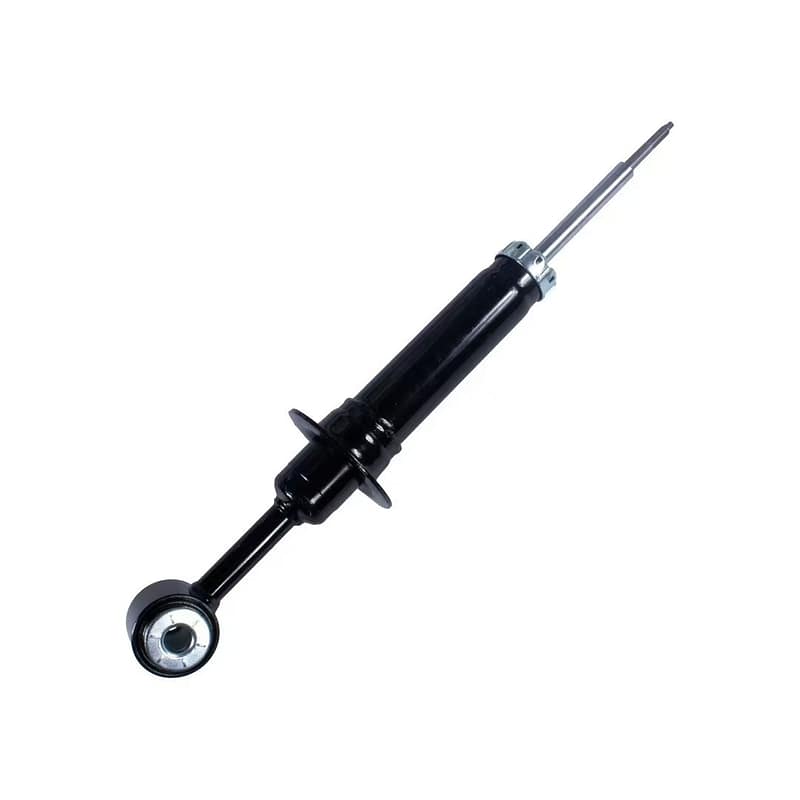
Meta Description: As the manufacturer, we address the critical question: How urgent is it to replace shocks? It’s a significant safety issue, not just a ride comfort problem. Delaying replacement can lead to longer braking, poor handling, and accelerated tire wear. Learn the risks of neglect.
Introduction
Every car owner has faced this dilemma: you’ve been told your shock absorbers are worn, perhaps after an inspection or by noticing a slight change in how your car feels. The question that naturally follows, carrying the weight of both cost and convenience, is “How urgent is it to replace shocks?”
It’s a tempting question to downplay. A “squeaky” shock or a slightly bouncy ride might seem like a minor annoyance, a cosmetic blemish on the driving experience rather than a critical failure. Many drivers are inclined to push the repair down the to-do list, prioritizing more immediate-sounding issues like a check-engine light or a failing battery. This perception—that shock absorber replacement is an elective, comfort-oriented maintenance item—is one of the most dangerous misconceptions in automotive care.
From the factory floor, where we subject our components to millions of stress cycles to validate their performance, we must state unequivocally: delaying the replacement of worn shock absorbers is a gamble. It’s not a gamble about ride quality; it’s a gamble about your safety and the safety of everyone sharing the road with you. A shock absorber is not a luxury component designed to provide a soft ride; it is a fundamental element of the vehicle’s safety systems. Its function is integral to maintaining tire contact with the road, which directly affects braking, cornering, stability, and control. While you can often continue to drive a car with a faulty water pump for a short time, the same cannot be said for a shock absorber. The consequences of its failure are immediate and can be catastrophic. This article will provide a factory-level perspective on the urgency of shock absorber replacement, breaking down the risks and helping you understand why this is a repair that should be treated with the same urgency as a brake job or a tire replacement.
Core Content
Section 1: Beyond the Bounce – The Safety Imperative of Healthy Shocks
To understand the urgency, we must first reframe our understanding of what a shock absorber does. The name itself is misleading. A shock absorber does not “absorb” bumps in the way a sponge absorbs water. Its primary function is damping. It works in conjunction with the springs to control the kinetic energy that is transferred to the wheels when the suspension travels over an uneven surface.
- The Spring’s Job vs. The Shock’s Job: The spring’s job is to support the vehicle’s weight and absorb the initial impact of a bump. However, without a shock, a compressed spring would continue to oscillate up and down, much like a ball bouncing. The shock absorber is what brings that motion to a quick, controlled stop. It provides the resistance needed to prevent the spring from bouncing uncontrollably.
The moment a shock absorber loses its effectiveness, this delicate balance is broken. The resulting instability is what creates the safety risks. Here are the primary failures that occur when shocks are not replaced promptly:
1. The Risk of Stopping: Braking Distance and Stability
A vehicle’s ability to stop quickly and safely is paramount. Worn shocks profoundly compromise this ability.
- Increased Braking Distance: This is the most critical safety risk. When you brake, the vehicle’s weight shifts forward, a phenomenon called “nose dive.” This transfers the load to the front suspension, compressing the springs. With healthy shocks, the front springs are controlled, allowing the weight to shift smoothly. This keeps more of the front tire’s tread in contact with the road, maximizing the tire’s ability to grip.
- With Worn Shocks: Worn shocks cannot properly control this forward weight transfer. The front springs can compress excessively and rebound violently. This causes the front wheels to hop and bounce off the road surface during hard braking. In that fraction of a second when the tire loses contact, it provides zero braking force. According to studies from automotive safety bodies, a vehicle with worn shocks can have a braking distance up to 20% longer than one with healthy shocks. At 60 mph, an extra 20% in braking distance can be the difference between stopping safely and colliding with a vehicle or obstacle ahead.
- Loss of Traction Control and ABS Effectiveness: Modern vehicles are equipped with sophisticated electronic stability control (ESC) and anti-lock braking systems (ABS). These systems rely on sensors that monitor wheel speed to detect when a wheel is starting to skid. Worn shocks cause the wheels to hop and spin inconsistently, creating confusing data for these sensors. A bouncing wheel can briefly spin much faster than the others, potentially tricking the ABS system into thinking it’s skidding when it isn’t, or vice versa. This can lead to a less effective and less predictable intervention from these critical safety systems.
2. The Risk of Turning: Cornering and Stability
Taking a corner safely relies on the vehicle’s ability to maintain a predictable, stable trajectory. Worn shocks turn a corner from a controlled maneuver into a potential rollover scenario.
- Excessive Body Roll: When you turn, centrifugal force causes the vehicle’s body to lean or “roll” to the outside of the turn. With healthy shocks, this roll is controlled and progressive. The damping forces resist the roll, keeping the vehicle flat and stable.
- With Worn Shocks: Damaged shocks offer little resistance to body roll. The vehicle will lean excessively, putting more load on the outside tires and less on the inside ones. This can easily push the outside tires beyond their grip limits, causing them to lose traction and leading to understeer (the car plowing straight) or, even more dangerously, oversteer (the rear of the car swinging out).
- Instability on the Highway: While cornering is a dramatic example, instability on straight roads is just as dangerous. At highway speeds, worn shocks cannot keep the tires planted, making the car susceptible to “tramlining”—following the grooves and imperfections in the road surface instead of tracking straight. This can force the driver to make constant, minor steering corrections, leading to fatigue and making the car vulnerable to being pulled off course by a sudden gust of wind or a large truck’s wake.
3. The Hidden Danger: The Compromised Steering and Suspension Linkage
This is a critical failure mode that is often overlooked, as the symptoms are not as immediately obvious as a bouncy ride. The shock absorber is installed on the vehicle with mounting hardware, which includes bolts, nuts, and rubber/polyurethane bushings that hold it to the chassis or control arms. While the internal damping element wears out, the physical hardware is also under immense stress.
- Stress on Neighboring Components: When a shock absorber no longer holds the suspension in check, the rest of the suspension—the control arms, ball joints, tie rods, and bushings—have to absorb all the shock that the shock was designed to handle. This puts enormous strain on these components, accelerating their wear.
- Catastrophic Hardware Failure: The most urgent risk is complete hardware failure. A worn-out or rusted-through shock mount can fail entirely while the car is in motion. A shock absorber that is no longer securely mounted can detach from the vehicle. At best, this results in a sudden, catastrophic loss of stability. At worst, it can cause the assembly to flail about, potentially damaging brake lines, fuel lines, or the body of the car. This is not a gradual failure; it is an abrupt and total loss of a safety-critical system.
Section 2: The Domino Effect – The True Cost of Delaying Replacement
Even if you are willing to accept the increased risk to personal safety, delaying shock replacement has a significant financial downside due to the chain of destruction it causes.
1. The Unseen Impact: Premature and Uneven Tire Wear
This is the most costly consequence of neglecting worn shocks, and it happens silently and out of sight. Worn shocks cause the tires to bounce, losing contact with the road.
- Cupping/Scalloping: This is the most common form of wear. As the wheel bounces, it comes down onto the pavement with a series of sharp impacts. Each impact tears small chunks of rubber out of the tread, creating a distinct, wavy, scalloped pattern.
- Feathering and Excessive Wear: The instability can also lead to “feathering,” where the tread blocks are worn more on one side than the other. Over time, this leads to a very rapid and uneven wear of the entire tire.
- The Financial Impact: A set of four high-quality tires can cost over 800−800-800−1,200. Replacing tires every 25,000 miles instead of the normal 50,000-60,000 miles because of bad shocks effectively doubles your annual tire budget. In the long run, delaying a shock absorber replacement (300−300-300−800) can lead to thousands of dollars in premature tire and even other suspension component repairs.
2. Accelerated Wear on Other Suspension Parts
As mentioned earlier, a failed shock creates a domino effect. The constant, uncontrolled motion puts extra stress on every other component in the suspension system.
- Control Arm Bushings: The bushings that connect the control arm to the chassis will wear out much faster.
- Ball Joints and Tie Rod Ends: These pivot points will endure more stress and can develop excessive play, leading to vague steering and an unstable feel.
- Struts (if applicable): On vehicles with MacPherson struts, the internal shock is part of the assembly. Failure of the shock unit can damage the more expensive strut housing, coil spring, and bearing plate.
The cost of fixing these additional problems can easily dwarf the original cost of replacing just the shocks. What begins as a single repair becomes a comprehensive, and thus much more expensive, suspension overhaul.
Conclusion: Urgency is a Measure of Safety, Not a Matter of Convenience
To return to the question: “How urgent is it to replace shocks?” The answer, from a manufacturer’s perspective, is unequivocally: Highly Urgent. It is not a maintenance item to be scheduled for when it’s convenient or when you have some extra cash. It is a safety-critical repair that should be addressed as soon as the first signs of failure appear.
The risk is not abstract. It is measured in longer stopping distances on a busy highway, in the instability during a sudden emergency maneuver, in the hidden destruction of your expensive tires, and in the potential for a catastrophic mechanical failure. Every bounce, every clunk, every sign of nose-dive or body roll is your car warning you that one of its most important safety systems is compromised.
Ultimately, the choice to delay this repair is a choice to accept a higher level of risk. For the safety of yourself, your passengers, and others on the road, that is a risk you should not take. Treat a shock absorber replacement with the same seriousness as a brake pad replacement or a timing belt change. It is an investment not in ride quality, but in the fundamental predictability and safety that you, as the driver, have the right to expect.