Introduction
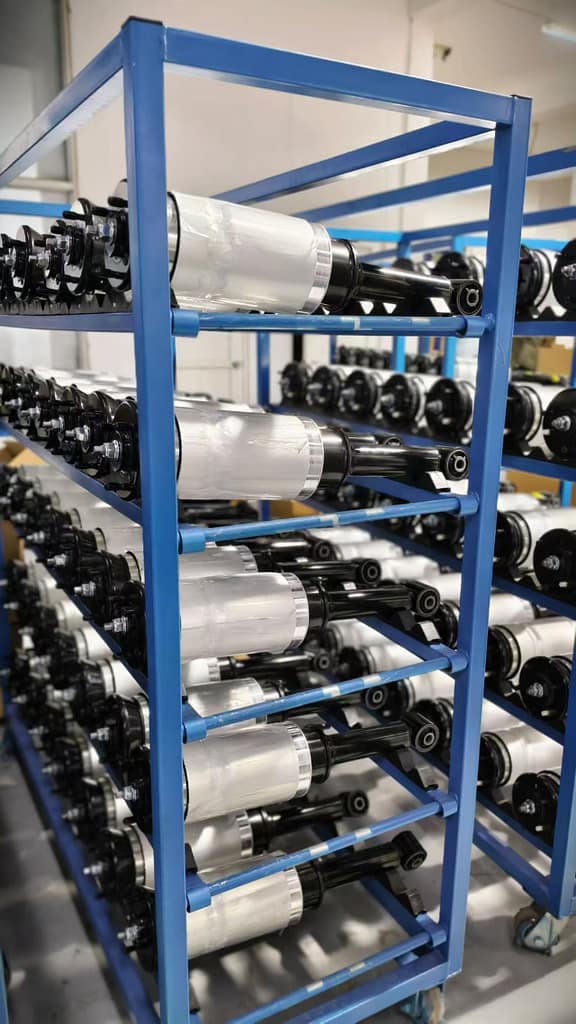
As a professional shock absorber manufacturing facility with over 25 years of engineering expertise, we frequently receive inquiries from vehicle owners asking “How do I test if my shocks are bad?” This comprehensive guide provides proven testing methods developed through our extensive quality assurance programs and field performance analysis.
Testing shock absorber condition requires understanding both visual inspection techniques and performance evaluation methods. Through manufacturing thousands of shock absorbers annually and analyzing field failure patterns, our engineering team has developed systematic testing approaches that accurately identify worn or defective shock absorbers before they compromise vehicle safety.
Modern shock absorbers are sophisticated hydraulic components designed to provide consistent dampening performance throughout their service life. However, normal wear, environmental factors, and driving conditions gradually reduce their effectiveness. Recognizing when shock absorbers require replacement prevents safety issues, improves ride quality, and protects other suspension components from premature wear.
Understanding Shock Absorber Function and Testing Principles
Before testing shock absorber condition, understanding their fundamental operation helps interpret test results accurately. Shock absorbers control spring oscillations through hydraulic dampening, converting kinetic energy from wheel movement into thermal energy dissipated as heat.
Our manufacturing process ensures precise hydraulic fluid viscosity, seal integrity, and valve calibration to provide consistent dampening force throughout the shock absorber’s stroke length. When these components deteriorate, specific performance characteristics change, creating identifiable symptoms through systematic testing.
Common failure modes include hydraulic seal deterioration, valve assembly wear, fluid contamination, and gas charge depletion in gas-filled units. Each failure type produces distinct test results, enabling accurate diagnosis of internal component condition.
Visual Inspection Testing Methods
External Condition Assessment
The first step in shock absorber testing involves comprehensive visual inspection identifying obvious damage or deterioration. Our quality control procedures emphasize systematic visual evaluation as the foundation for accurate condition assessment.
Key Visual Inspection Points:
Hydraulic Fluid Leakage Detection
- Examine shock absorber body for oil stains or wet spots
- Check piston rod seals for fluid seepage or accumulation
- Inspect mounting points for hydraulic fluid residue
- Look for oil contamination on nearby components
Our manufacturing specifications define acceptable versus unacceptable fluid seepage levels. Any visible fluid accumulation beyond light seepage indicates internal seal failure requiring immediate replacement.
Physical Damage Evaluation
- Assess shock absorber body for dents, scratches, or deformation
- Examine piston rod for scoring, corrosion, or bending
- Check mounting hardware for wear, damage, or looseness
- Verify proper shock absorber orientation and alignment
Mounting System Inspection
- Evaluate upper and lower mounting points for wear
- Check bushings and hardware for deterioration or damage
- Assess mounting bolt torque and condition
- Verify shock absorber positioning within suspension geometry
Professional Visual Assessment Techniques
Our technical training programs emphasize systematic visual inspection using proper lighting and positioning to identify subtle damage or wear patterns. Professional assessment includes using flashlights to illuminate hard-to-see areas, cleaning shock absorber surfaces to remove debris, and comparing left and right shock absorbers for consistency.
The Bounce Test – Primary Performance Diagnostic
The bounce test represents the most widely used field diagnostic method for shock absorber condition assessment. This test evaluates the shock absorber’s ability to control spring oscillations effectively.
Proper Bounce Test Procedure
- Position vehicle on level, stable surface
- Apply firm downward pressure to each corner of the vehicle
- Push down approximately 2-3 inches and release quickly
- Observe vehicle movement and count oscillation cycles
- Repeat test at each corner for comparison
Interpreting Bounce Test Results
- Normal condition: Vehicle returns to rest position within one complete bounce cycle
- Marginal condition: Slight additional movement or settling after primary bounce
- Failed condition: Multiple bounces or continued oscillation beyond normal limits
Our engineering data shows properly functioning shock absorbers should eliminate spring oscillations within 1.5 seconds after release. Extended bouncing indicates internal component failure requiring replacement.
Bounce Test Considerations
Test effectiveness depends on spring condition and vehicle weight distribution. Heavy vehicles may show different bounce characteristics than lighter cars. Aftermarket modifications can affect normal bounce test results, and professional evaluation may be required for borderline results.
Dynamic Road Testing Procedures
Road testing provides comprehensive shock absorber performance evaluation under actual driving conditions. Our field testing protocols evaluate shock absorber function across various scenarios that reveal performance degradation.
Systematic Road Test Approach
Low-Speed Evaluation: Assess vehicle control during parking lot maneuvers and slow-speed navigation over speed bumps or small obstacles.
Highway Stability Testing: Evaluate high-speed stability, steering response, and vehicle tracking during highway driving conditions.
Braking Performance Assessment: Test front-end dive control during moderate braking and evaluate stopping stability.
Cornering Stability Evaluation: Assess body roll control during turns and lane changes at various speeds.
Road Test Performance Indicators
- Excessive bouncing over bumps or road irregularities
- Poor steering response or reduced road feel
- Increased stopping distances or front-end diving during braking
- Excessive body roll or instability during cornering
- Vehicle wandering or difficulty maintaining straight-line tracking
Professional Equipment Testing
Advanced diagnostic facilities utilize specialized equipment providing precise shock absorber performance measurements beyond basic field testing capabilities.
Shock Absorber Dynamometer Testing
Professional dynamometers measure exact dampening force curves throughout the shock absorber’s stroke length, providing definitive performance assessment compared to manufacturer specifications. This testing reveals internal component condition and performance degradation levels.
Suspension Analyzer Systems
Computerized suspension analyzers evaluate overall suspension system performance including shock absorber contribution to vehicle stability and ride quality. These systems identify interactions between shock absorbers and other suspension components.
Vibration Analysis Equipment
Specialized vibration measurement tools identify specific frequency response characteristics indicating shock absorber condition and performance degradation patterns not detectable through basic field testing.
Comprehensive Testing Sequence
Step-by-Step Diagnostic Protocol
Our recommended testing sequence combines multiple evaluation methods to provide comprehensive shock absorber condition assessment:
Phase 1: Pre-Test Preparation
- Ensure vehicle is parked on level surface
- Allow shock absorbers to cool if recently driven
- Clean shock absorber areas for clear visual inspection
- Gather necessary tools and documentation materials
Phase 2: Visual Inspection Evaluation
- Conduct systematic visual inspection following established procedures
- Document any visible damage, leakage, or wear patterns
- Compare left and right shock absorbers for consistency
Phase 3: Performance Testing
- Perform bounce test at each vehicle corner
- Conduct road testing following established protocols
- Evaluate steering response and vehicle stability characteristics
- Document test results and observations
Phase 4: Results Analysis
- Compare test results to manufacturer specifications
- Assess overall suspension system condition
- Determine replacement requirements and priorities
Interpreting Test Results and Replacement Criteria
Performance Standards
Our manufacturing quality standards provide benchmarks for evaluating shock absorber test results against acceptable performance parameters.
Normal Performance Indicators:
- Minimal fluid seepage within manufacturer tolerances
- Controlled vehicle movement during bounce testing
- Consistent steering response and stability during road testing
- Absence of unusual noises or vibrations
Failed Performance Criteria:
- Visible hydraulic fluid leakage exceeding normal limits
- Multiple bounce cycles during testing procedures
- Significant deterioration in ride quality or vehicle control
- Physical damage affecting shock absorber operation
Replacement Decision Factors
Immediate Replacement Requirements:
- Significant hydraulic fluid leakage
- Failed bounce test results
- Safety-related performance degradation
- Physical damage affecting operation
Planned Replacement Considerations:
- Marginal test results with declining performance trends
- High mileage approaching recommended replacement intervals
- Preventive maintenance scheduling with other suspension work
Professional vs. DIY Testing
DIY Testing Capabilities
Vehicle owners can perform basic shock absorber testing using simple procedures that provide valuable condition assessment information including visual inspection for obvious damage, basic bounce testing following proper procedures, and general ride quality evaluation.
Professional Testing Advantages
Professional shock absorber testing provides comprehensive evaluation using advanced equipment and expertise including access to specialized diagnostic equipment, comprehensive suspension system evaluation, and expert interpretation of test results.
Manufacturing Quality and Testing Standards
As shock absorber manufacturers, we implement comprehensive testing at every production stage ensuring consistent quality and performance characteristics. Our facility maintains ISO/TS 16949 certification and consistently meets original equipment manufacturer specifications through rigorous quality control processes.
Our engineering team continuously monitors field performance data including warranty return analysis, customer feedback evaluation, and long-term durability studies tracking component life cycles to improve manufacturing processes and testing recommendations.
Maintenance Testing Schedules
Regular shock absorber testing helps identify developing issues before complete failure occurs. We recommend visual inspection every 12,000 miles during routine maintenance, comprehensive testing every 50,000 miles, and professional evaluation when performance changes are noticed.
Effective condition monitoring involves documenting test results for trend analysis, photographing significant findings for comparison, tracking mileage and service history, and monitoring related component condition.
Conclusion
Testing shock absorber condition requires systematic evaluation combining visual inspection, performance testing, and professional assessment when necessary. As manufacturing experts with extensive quality control experience, we emphasize that early detection of shock absorber deterioration prevents safety issues and protects other suspension components.
The bounce test remains the most accessible and reliable field diagnostic method, while visual inspection identifies obvious damage requiring immediate attention. Professional testing provides comprehensive evaluation when definitive assessment is needed or borderline conditions exist.
Regular shock absorber testing should be integrated into preventive maintenance programs, enabling proactive replacement that maintains vehicle safety and performance. Our commitment to manufacturing excellence ensures replacement shock absorbers provide reliable service when properly selected and installed according to manufacturer specifications.
Understanding how to test shock absorber condition empowers vehicle owners to maintain optimal suspension performance while preventing costly repairs resulting from delayed maintenance.