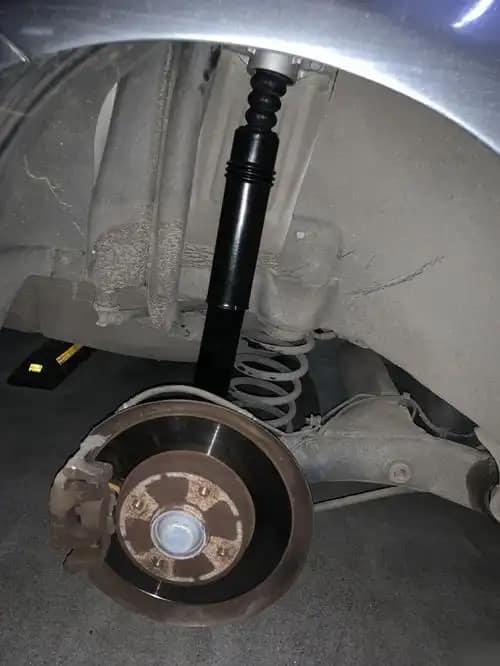
Meta Description: How long do shock absorbers last? As a leading manufacturer, we provide an expert answer, covering factory testing, key lifespan factors like mileage and driving conditions, and clear signs of failure to help you know when to replace your shock absorbers.
Introduction
At our factory, when we’re asked, “How long do shock absorbers last?”, it’s a question we approach with both pride and a deep sense of responsibility. We’ve engineered, tested, and manufactured these components for decades, pushing them to their absolute limits on our test benches and proving grounds. The simple, one-size-fits-all answer—”50,000 miles”—is a disservice to both the engineering that goes into our products and the safety of the driver. The reality is that the lifespan of a shock absorber is not a fixed number. It’s a dynamic equation influenced by a complex interplay of our manufacturing quality and the real-world conditions you, the driver, impose upon it. This guide, born from our factory floor, will give you a definitive answer to how long do shock absorbers last, helping you understand the factors that influence their longevity and, more importantly, how to identify when they are no longer performing their critical safety function.
Core Content
Section 1: The Manufacturer’s Benchmark: Factory Testing and Design Life
When a customer asks how long do shock absorbers last, they are often seeking a warranty guideline. Our warranties are based on extensive, controlled testing that simulates a lifetime of abuse a typical driver would never inflict. A standard street-performance shock absorber from our factory might be subjected to:
- Millions of Cycles: Our hydraulic test rigs simulate suspension movement, cycling the shock absorber millions of times to simulate hundreds of thousands of miles of driving, testing for wear on the valves and seals.
- Durability Cycle Testing: We use specialized rigs that simulate severe conditions like potholes, cobblestones, and constant high-speed vibrations to ensure the shock absorber body, piston rod, and mounting hardware don’t fail.
- High-Temperature Testing: We cycle the shock absorber to its maximum operating temperature (often over 300°F or 150°C) and hold it there for extended periods to test the stability of the hydraulic fluid and the integrity of the seals under thermal stress.
- Salt Spray and Corrosion Testing: For components destined for regions with harsh winters or coastal areas, we put them in salt-spray chambers to simulate years of road salt exposure, ensuring the shock absorber rod and body can resist corrosion.
Through this rigorous testing, we can confidently state that a properly manufactured shock absorber has a design life that can easily exceed 100,000 miles under ideal conditions. This internal benchmark is our goal. However, the real-world mileage you achieve, how long do shock absorbers last for you, is almost always determined by factors outside of our factory gates.
Section 2: The Primary Determinants of Shock Absorber Lifespan
How long do shock absorbers last? The answer is highly dependent on a few key variables. The most significant is mileage, but it’s far from the only factor.
1. Mileage (The Most Common Metric): Mileage is the most frequently cited benchmark. While we design for longevity, wear is inevitable. Internally, components like the valve stacks, the piston rod seals, and the hydraulic fluid degrade over time due to heat, pressure, and friction.
- General Guideline: Most automotive experts, including technicians, will give a range of 50,000 to 100,000 miles (80,000 to 160,000 kilometers). However, this is a very broad average. A shock absorber built for a heavy SUV will subject its components to far more stress than one for a compact car, potentially shortening its effective lifespan even within that mileage range.
2. Driving Conditions and Habits: This is the single most critical variable that our controlled testing cannot fully replicate. Aggressive driving dramatically reduces the lifespan of a shock absorber.
- Aggressive Driving: Hard cornering, rapid acceleration, and especially hard braking subject the suspension system to immense, instantaneous forces. Every aggressive maneuver puts more stress on the shock absorber‘s internal components, causing them to wear out faster.
- Road Quality: This is a massive factor. Driving on smooth, newly paved highways subjects your shock absorber to minimal stress. Conversely, if your daily commute includes potholes, speed bumps, rough gravel roads, or construction zones, every single impact sends a shock through the suspension. This repeated stress is what truly degrades a shock absorber over time. A car used in the city with bad roads will need replacement far sooner than a highway cruiser.
Section 3: Secondary Factors That Severely Impact Shock Absorber Longevity
How long do shock absorbers last can also be significantly shortened by secondary factors that are often overlooked, as they are not inherent to the shock absorber itself but are part of its immediate environment within the suspension system.
1. Load Carrying Capacity: Every shock absorber is engineered for a specific vehicle weight. Continually carrying heavy loads—like towing a trailer or hauling heavy cargo—places a constant, heavy burden on the shocks. The internal fluid gets hotter, the seals are under greater pressure, and the rod has to do more work. This excessive load accelerates wear, drastically shortening the shock absorber‘s life. For this reason, we often recommend heavy-duty or helper springs for vehicles that regularly carry heavy loads.
2. The Suspension System it Lives In: A shock absorber is a component of a team. If other members of the suspension system are failing, they will accelerate the wear on the shock absorber, and vice-versa.
- Worn Springs: A weak or sagging spring cannot support the vehicle’s weight properly. This allows the shock absorber to work much harder and cycle more often than designed, leading to premature fatigue.
- Worn Bushings and Ball Joints: Worn suspension bushings create excessive play and imprecise suspension movement. This erratic motion forces the shock absorber to work inconsistently and against forces it was not designed to handle, putting stress on its internal seals and valves.
3. Climate and Environmental Factors: While we design our shock absorbers to withstand a wide range of environments, extreme elements take a toll.
- Heat: Consistently high ambient temperatures increase the operating temperature of the hydraulic fluid, accelerating its breakdown and the aging of rubber seals.
- Moisture and Road Salt: This is a primary cause of failure for the external components. Rust and pitting on the shock absorber rod will tear the dust boot and then the main piston rod seal. Once the seal is compromised, the shock absorber will leak fluid, lose its damping ability, and is effectively dead. Cars in cold, snowy climates or coastal areas are particularly susceptible to this type of corrosion-related failure.
Section 4: The Indicators of Failure: How to Tell When Your Shock Absorbers Are Worn
Instead of asking “how long do shock absorbers last?” and waiting for a fixed mileage, it is far safer and more practical to learn the signs of failure. A worn shock absorber doesn’t just mean a poor ride; it’s a critical safety hazard.
- Visual Inspection: Look for oil or fluid leaks on the outside of the shock absorber. Look for dents, dings, or pitting on the piston rod. Check for loose or broken mounting hardware.
- The Bounce Test: Press firmly on the corner of your car. If the car continues to bounce more than one or two times after you release it, the shock absorber is not effectively dampening the spring’s motion and is likely worn out.
- Handling Instability:
- Nose Dives on Braking: The front end of the car lurches forward significantly when you brake.
- Squat on Acceleration: The rear of the car dips down hard when you accelerate.
- Body Roll in Corners: The car feels like it’s rolling or leaning excessively when taking a corner at speed.
- Instability on Highways: The car feels “floaty” or unstable and wanders on straight roads, especially in crosswinds.
- Uneven Tire Wear: This is a classic sign. Worn shock absorbers cannot keep the tire uniformly pressed against the road. This causes a “cupping” or “scalloping” pattern on the tire tread. This not only ruins the tire but is a clear signal of a damping failure.
Conclusion
So, how long do shock absorbers last? As a factory, we can tell you that under our test conditions, they are built to last. But in the real world, the answer is as varied as the roads you drive. The lifespan of a shock absorber is a direct reflection of the vehicle’s usage, its maintenance, and the environment it operates in. While mileage provides a rough guideline, it is not a reliable predictor of failure. A car driven in the city over rough roads will wear out its shock absorbers long before a highway cruiser hits the same mileage. The most accurate answer to how long do shock absorbers last is: “Until they stop doing their job correctly.” And that is a moment you can’t afford to miss. Knowing the signs of failure and inspecting your suspension system regularly is the best way to ensure your safety and get the maximum service life from your vehicle’s components.