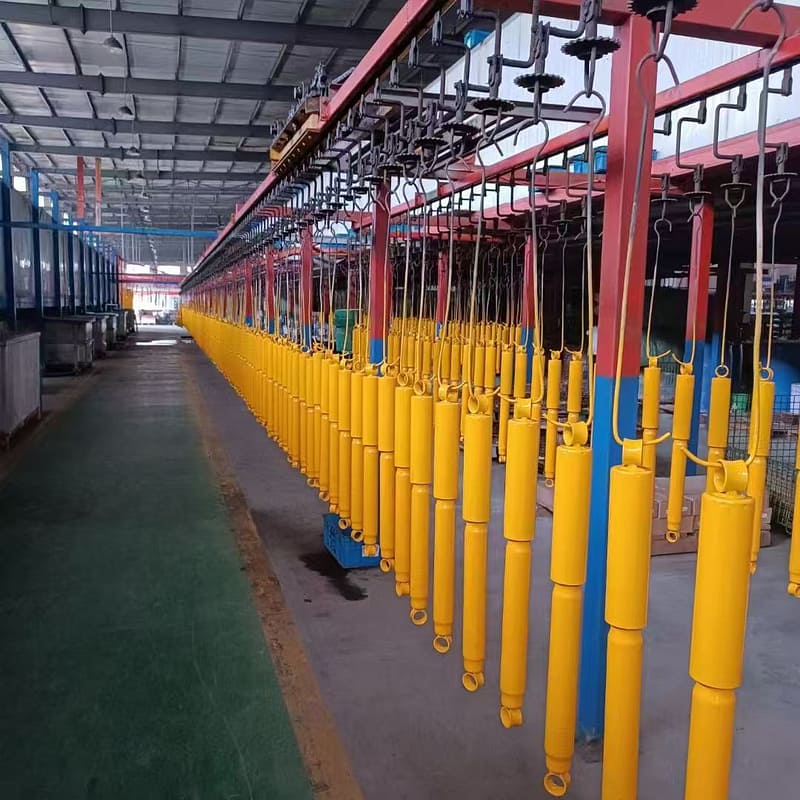
Meta Description: Wondering how long do shock absorbers last? From the factory floor, we provide the definitive answer on lifespan. Learn the 50,000-100,000 mile rule, factors affecting longevity, and key signs of failure for optimal safety and performance.
Introduction
A fundamental question for every vehicle owner sooner or later is: “How long do shock absorbers last?” It’s a seemingly simple query, yet the answer is not a single, universal number. It’s a variable, dependent on a complex interplay of vehicle design, driving habits, road conditions, and maintenance. At our manufacturing facility, where our R&D teams spend their lives pushing the boundaries of suspension technology, this question is more than a customer FAQ; it’s a core aspect of our engineering philosophy. We design our products to meet the rigorous demands of modern driving, but their actual lifespan is ultimately determined by the life they lead in the field.
The shock absorber is one of the most unsung, yet critically important, components of a vehicle’s chassis. It is often misunderstood as a device that simply “absorbs bumps,” but its true function is far more nuanced and vital. It is a damper that controls the kinetic energy of the springs, ensuring the tires maintain constant contact with the road. This control is paramount for vehicle safety, stability, and braking efficiency. When a shock absorber degrades, it doesn’t just lead to a bouncy ride; it degrades the entire safety equation of the vehicle.
This definitive guide serves as your authoritative resource on shock absorber lifespan, penned from the perspective of the engineers who build them. We will move beyond the generic “every 50,000 miles” advice to provide a deep, data-driven understanding of what determines how long shocks truly last. We will explore the industry standards, the real-world factors that accelerate or decelerate wear, and, most importantly, the definitive signs that your shocks are no longer performing as intended. The goal is to empower you, the vehicle owner, with the knowledge to make informed decisions about maintenance, ensuring you never have to ask—too late—how long your shocks were supposed to last.
Core Content
Section 1: The General Rule of Thumb – The 50,000 to 100,000 Mile Guideline
If you ask a mechanic or consult a general automotive forum, the most common answer to “How long do shock absorbers last?” will fall within the range of 50,000 to 100,000 miles. This figure is based on decades of industry data and manufacturer recommendations, but it’s crucial to understand what it represents. This range is a general guideline for the average driver under typical conditions. For us as manufacturers, it’s a benchmark we aim to meet and exceed through robust engineering and high-quality materials.
Understanding the Variables Think of this 50k-to-100k-mile window as a spectrum, not a single point. At the lower end of the spectrum (around 50,000 miles) you might find a shock on a vehicle that is constantly subjected to extreme conditions. At the upper end (100,000+ miles), you might find a shock on a vehicle that operates almost exclusively under ideal circumstances. The difference between these two endpoints lies in the factors we will detail in the next section.
For many modern vehicles, this number is being pushed higher. Advances in materials science—such as hardened, corrosion-resistant piston rods and higher-grade, heat-resistant synthetic oils—have allowed some premium shock absorber manufacturers to confidently extend their warranty periods and suggest longer service intervals for city and highway driving. However, this does not mean they are everlasting. It simply means they are more resilient to the daily wear and tear that causes traditional fluids and materials to degrade. Our own in-house endurance testing subjects shocks to 1.5 to 2 times the expected service life to ensure they don’t simply fail at the 50,000-mile mark but provide consistent performance well beyond it until the signs of degradation become apparent.
It is also essential to differentiate between a shock absorber and a strut assembly. A strut is a more complex component that integrates the shock with a coil spring and a steering knuckle. Due to the greater load and more complex movement, struts often have a similar service-life guideline and are typically replaced in pairs (or as a complete axle set), just like shock absorbers, to ensure balanced handling and a safe ride.
Section 2: Factors That Influence Shock Absorber Lifespan – The Real-World Equation
While the 50,000-100,000 mile guideline provides a useful starting point, the true lifespan of your shocks is determined by a unique formula: Quality + Design + Conditions = Lifespan. As the manufacturer, we have control over the first two variables, but the third—conditions—is entirely in the hands of the driver and the environment.
1. Vehicle Design and Loading
- Vehicle Type & Weight: A heavy SUV or truck, especially one that is frequently used for towing or hauling, places a significantly higher strain on its shock absorbers than a lightweight passenger sedan designed for commuting. The mass being controlled by the shocks is greater, and the impact forces from road irregularities are amplified. A shock on a heavy-duty pickup will almost always have a shorter effective lifespan than one on a small hatchback, all other factors being equal.
- Suspension Geometry: The inherent design of a vehicle’s suspension also plays a role. Some designs are inherently harsher on components than others. Additionally, the condition of other suspension components is paramount. Worn-out bushings, ball joints, or worn-out springs force the shock absorber to work outside its design parameters. A shock is designed to control spring oscillation; if the spring is weak, the shock must work overtime, accelerating internal wear.
2. Driving Habits and Conditions This is perhaps the most significant factor that the owner controls, and it has a direct and dramatic impact on the answer to “How long do shock absorbers last?”
- Aggressive Driving: Hard acceleration, hard braking, and, most of all, cornering at high forces put tremendous lateral and dynamic loads on the shocks. This leads to more heat generation and higher internal stress on the valve stacks and seals, accelerating wear.
- Road Quality: This is a non-negotiable variable. Driving on smooth, well-maintained highways puts far less stress on a shock absorber than navigating pothole-riddled city streets, rough gravel roads, or unpaved trails. Regular impacts with bumps, potholes, and speed bumps send violent shockwaves through the suspension system, which the shocks must manage. Over time, this constant pounding fatigues the metal components and damages the internal seals.
- Environment and Climate: For those in regions that use de-icing salts in the winter, corrosion is the number one enemy. As we’ve mentioned before, road salt attacks the metal components of the shock, especially the piston rod and the upper mounts. Rust can cause the piston rod to score, leading to fluid leaks, or can weaken the upper mount, causing it to crack or fail entirely. In these “rust belt” states, a shock absorber’s life is often cut short by corrosion rather than simple mechanical wear.
Section 3: The Warning Signs – How to Know When Your Shocks Are Failing
A scheduled replacement interval is one way to approach maintenance, but it’s a reactive, mileage-based approach. A more proactive and safer method is to learn to recognize the symptoms of a shock absorber that has reached the end of its effective life. If your shocks are exhibiting these signs, their performance has already degraded significantly, potentially compromising your safety.
1. Visible Fluid Leaks This is the most obvious sign of seal failure. A healthy shock absorber body should be dry. If you notice an oily film or wet streak running down the side of the shock body (especially from the top seal where the shaft enters), it means the internal seals are no longer holding the pressurized fluid. This fluid, often a specialized hydraulic oil combined with nitrogen gas, is essential for damping. A leaky shock is a shock that has failed and must be replaced immediately.
2. Uneven Tire Wear Since the primary function of a shock is to keep the tires firmly planted on the road, a failing shock will not do this job effectively. The tires will bounce and “chatter” over the pavement, causing a specific type of wear known as “cupping,” “scalloping,” or “feathering.” This results in patches of worn rubber around the tire’s circumference, which you can often feel as a thumping or humming sensation in the steering wheel. This damage not only ruins a perfectly good set of tires but also is a clear indicator of a suspension problem that needs immediate attention.
3. Poor Ride Quality and Handling Instability This is the classic symptom most people associate with bad shocks. If your car “dives” and “squats” dramatically under braking and acceleration, respectively, it’s a sign that the shocks can no longer control the weight transfer of the vehicle. If the car body rolls excessively during cornering, feeling unstable and “boat-like,” your shocks are not providing the necessary lateral stability. If you experience a bouncy, unsettled ride even on minor road imperfections, the shock’s ability to control the spring’s rebound has been lost.
4. Braking Issues and Nose-Dive When you brake, the weight of the car shifts forward. A good shock absorbs this shift, keeping the front end relatively level and allowing the front tires to do their job. Worn shocks will allow the front of the car to “nose-dive” aggressively, a sensation that can be unnerving and dangerous, as it compromises the stability and steering effectiveness of the front tires.
5. Mileage and Age Finally, don’t ignore the simplest indicator: mileage. If your vehicle is approaching or has surpassed the 50,000-to-80,000-mile range, and you also notice one or more of the symptoms above, you can be reasonably confident that your shocks need replacement, even if they don’t appear to be leaking.
Section 4: Maximizing the Life of Your Shock Absorbers
While some factors are outside of your control, there are several proactive steps you can take as an owner to maximize the lifespan of the shock absorbers we and other manufacturers build for you.
1. Practice Proactive Driving This is the single most effective thing you can do. Actively avoiding potholes, slowing down before speed bumps, and not “slamming” on the brakes will drastically reduce the mechanical stress and impact forces that damage shocks over time. Defensive driving isn’t just about avoiding collisions; it’s also about preserving the health of your vehicle.
2. Adhere to Load Ratings Never exceed the manufacturer’s recommended payload or towing capacity for your vehicle. Overloading puts the suspension system, including the shocks, under constant stress they were not designed to handle. This is one of the fastest ways to guarantee premature failure.
3. Follow a Regular Maintenance Schedule A key principle of suspension health is to replace supporting components as they wear. When you need to replace control arm bushings, ball joints, or tie rods, it is an excellent opportunity to have your shock absorbers inspected. Replacing a worn-out spring that is over-compressing your new shocks will only shorten the new shocks’ life.
4. Keep Your Vehicle Clean Washing your vehicle regularly, especially the wheel wells and undercarriage, is critical for removing the corrosive salts and dirt that are so destructive to the metal components of your shock absorbers.
Conclusion
So, “How long do shock absorbers last?” The definitive answer, from the factory floor, is this: Their lifespan is a dynamic range of 50,000 to 100,000 miles, heavily influenced by vehicle design, driving habits, and environmental conditions. It is not a fixed date on a calendar but a function of stress and maintenance. While we engineers build them to be as robust and durable as possible, their longevity is a collaborative effort between our quality manufacturing and your responsible ownership.
Ignoring the health of your shock absorbers is not just a matter of ride comfort; it is a direct compromise on your vehicle’s safety, stability, and braking capability. By understanding the factors that influence their wear and learning to recognize the warning signs of failure, you can move from a reactive to a proactive maintenance strategy. Protect your investment, ensure your safety, and preserve the optimal driving performance that your vehicle was engineered to deliver. Don’t wait for your shocks to fail; inspect them, maintain them, and replace them when needed. Your safety, and the integrity of your tires, depend on it.