Meta Description: Ever wonder, “How much does it cost to replace shock absorbers?” We break down the costs from 50to50 to 50to500+ per unit, covering part types, labor rates, and vehicle complexity. Learn why quality is an investment in safety and performance.
Introduction
For any vehicle owner, the unexpected check-engine light is a cause for concern, as is a sudden, unpleasant noise emanating from the engine bay. However, few maintenance warnings are as subtly urgent as the gradual decline in a car’s handling and ride quality. It starts almost imperceptibly—perhaps a slight, wobbly feeling over a bridge expansion joint or a car that seems to continue bouncing after hitting a small bump. Eventually, the question moves from a vague feeling to a direct search: “How much does it cost to replace shock absorbers?”
This question is one of the most common in the automotive repair world, and for good reason. The answer isn’t a single, simple number. It’s a variable that shifts based on a host of factors, from the type of vehicle you own to the quality of the parts you select. The confusion is understandable; a quick online search reveals a staggering price range, leaving many drivers wondering if they’re getting a fair deal or if they’re about to be overcharged. This uncertainty can lead to procrastination, putting off a repair that is fundamentally about safety.
As a manufacturer, our perspective is rooted in the science of motion control. We don’t just build shock absorbers; we engineer critical safety components. Our goal is to provide not just a product, but clarity. This comprehensive guide is designed to demystify the cost of replacing your shock absorbers. We will dissect the elements that influence the final price, explain the technology difference that justifies a cost gap, and articulate why choosing quality is the most financially sound and safest decision you can make. Consider this your roadmap to navigating shock absorber replacement costs with confidence.
Core Content
Section 1: The Variable Foundation – Understanding the Parts Themselves
At the heart of any shock absorber replacement cost estimate lies the price of the part itself. Not all shock absorbers are created equal. They range from basic, functional components to advanced, high-performance systems. Understanding this spectrum is the first step to understanding why costs fluctuate so dramatically.
1. Standalone Shock Absorbers vs. Strut Assemblies: A Critical Distinction
The first and most important variable is identifying the correct component for your vehicle. While the terms are often used interchangeably, a standalone shock absorber and a strut assembly are two different parts with vastly different functions, and therefore, vastly different costs.
- Standalone Shock Absorber: This is a single-purpose component. Its job is exclusively to dampen the oscillation of the vehicle’s springs. It is not a structural part of the suspension and does not support the vehicle’s weight. You will typically find these on vehicles with a conventional, separate spring and shock design, such as many pickup trucks and body-on-frame SUVs.
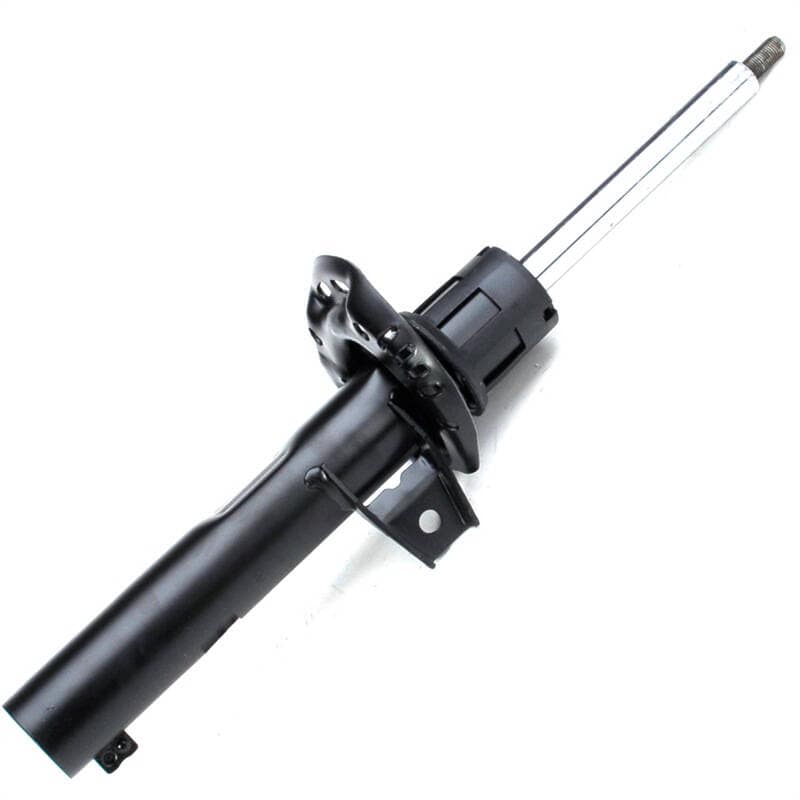
- Strut Assembly: A strut assembly is a much more complex, multi-functional part. It integrates the shock absorber into a single unit that serves as the main structural support for the vehicle’s wheel assembly. It performs three key jobs:
- Suspension: It dampens spring oscillation.
- Support: It bears a significant portion of the vehicle’s weight.
- Steering: It acts as a pivot point for the steering system.
Replacing a simple shock absorber is a significantly less labor-intensive and less expensive job than replacing a strut assembly. If your vehicle requires struts, your quote will naturally be higher. A professional inspection is the only way to be certain which component you need.
2. The Technology Spectrum: From Hydraulic to High-Performance
Beyond the component type, the internal technology and build quality of the shock absorber are the primary drivers of its cost. This is where the difference between a 50anda50 and a 50anda250 part becomes clear.
- Conventional Hydraulic Shocks: This is the entry-level technology. These shocks use oil that is forced through valving passages as a piston moves up and down. This design is simple and inexpensive to manufacture but has a significant weakness: they are prone to aeration. When pushed hard, the oil can foam, mixing with air and creating a spongy, inconsistent feel and fade. They are typically found on older or economy vehicles where performance and load capacity are not primary concerns.
- Gas-Charged Shocks: This is the standard for all modern and quality replacement vehicles. Gas-charged shocks contain pressurized nitrogen gas, either in a separate tube within the main body (twin-tube) or in the main pressurized chamber (monotube). This gas serves two critical functions:
- Prevents Aeration: The high pressure keeps the oil in a liquid state, ensuring consistent, fade-free damping performance even under demanding conditions.
- Improves Response: The gas pressure provides a subtle force that helps control the rebound of the suspension, leading to quicker wheel control, better handling, and a more stable ride. The precision seals and pressurization required make gas-charged shocks more expensive to produce, but they offer a vast improvement in performance and longevity.
- High-Performance and Adjustable Shocks: At the premium end of the market are shocks designed for specific, demanding applications.
- High-Performance: Engineered for sports cars and spirited driving, these features larger pistons, multi-stage valving, and superior heat dissipation to maintain control during aggressive cornering and hard braking.
- Adjustable: These allow the driver to tune the damping force on the fly, adapting the ride for the street or the track. This level of engineering and complexity commands a much higher price point.
- Loaded vs. Unloaded Struts: When replacing struts, you’ll encounter another cost variable. An “unloaded” strut assembly comes with the main housing and shock, allowing a technician to reuse your existing coil spring and strut mount. A “loaded” strut assembly comes pre-assembled with a new spring, strut mount, and bearing plate. While the upfront cost of a loaded strut is higher, it is often the superior option. The strut mount is a critical wear item; reusing an old, worn one is a leading cause of clunking noises and continued instability. A loaded strut guarantees a complete, correct, and rattle-free repair.
Section 2: Beyond the Part – The Cost of Labor and Your Vehicle’s Unique Factors
The cost of the physical shock absorber or strut assembly is only one part of the equation. The labor required for installation is a significant, and sometimes larger, portion of your final bill. This cost is not arbitrary; it’s determined by the specific demands of your vehicle.
1. Dissecting the Labor Rate
Mechanics charge by the hour, and this rate is a major component of the cost. Rates vary widely based on several factors:
- Geographic Location: Labor rates are higher in major metropolitan areas and lower in rural regions.
- Type of Facility: A dealership service center typically has the highest labor rates due to specialized training for that specific brand. An independent repair shop will often have slightly lower rates. A national chain like Midas or Pep Boys will have standardized, nationally advertised rates.
- Technician Expertise: Master-certified technicians warrant higher pay.
When you get an estimate, ensure you understand the shop’s labor rate (90−90-90−200+ per hour is common in the US).
2. The Complexity of the Installation Job
Not all shock/strut replacements are created equal. Some are straightforward jobs, while others are exceptionally complex, dramatically affecting the labor hours required.
- Time and Complexity:
- Simple Jobs: Replacing the shocks on a truck with a live rear axle is a relatively simple task. The component is accessible, and there are few obstructions. This might take as little as 30 minutes per wheel.
- Complex Jobs: Front strut replacement on a modern front-wheel-drive or all-wheel-drive sedan is a much more involved process. The strut assembly is located deep within the engine bay, connected to the steering knuckle, and often integrated with ABS wheel speed sensor wiring and brake lines. Removing and reinstalling this requires careful disassembly of other suspension components, adding significantly to the labor time (often 1.5-2.5 hours per wheel).
- The Wrath of Rust: For those in snowy, salt-heavy climates, rust is the great equalizer and cost multiplier. What should be a simple job can become a nightmare of seized, rusted bolts and corroded mounting hardware. Extracting these bolts often requires penetrating fluids, specialized tools (like an impact wrench or torch), and immense patience. This can easily add an extra hour or more of labor to a job. This is a perfect example of why a simple quote can become more expensive; a shop cannot always know the extent of rust until they are into the job.
- Wheel Alignment: A Non-Negotiable Cost: This is perhaps the most overlooked but essential cost associated with replacing struts, or any front suspension component. When the struts are removed, it resets the wheel’s alignment settings (camber, caster, toe). If these are not professionally adjusted after the new parts are installed, you will experience poor handling, rapid and uneven tire wear, and potentially unsafe driving conditions. A four-wheel alignment is not an add-on; it is an integral part of a proper strut replacement and should be included in any “all-in” price.
Conclusion: Investing in Safety and Value
So, when you ask the question, “How much does it cost to replace shock absorbers?”, the answer is a range that depends on a careful analysis of the parts, labor, and your vehicle’s specific condition. The cost can range from a few hundred dollars for a simple shock replacement on a truck to over a thousand dollars for a full set of high-performance, adjustable struts at a dealership, including alignment.
While it is tempting to select the lowest possible quote, we must emphasize this is a repair where quality is not optional—it is essential. The price difference between a budget hydraulic shock and a premium gas-charged shock is an investment in predictable handling, shorter braking distances, and overall vehicle stability. A worn or low-quality shock is a silent safety risk. Further, choosing a quality part and a reputable shop that performs the job correctly will save you money in the long run by protecting your tires and ensuring the repair lasts for the intended service life. Don’t view this as an expense; view it as a vital investment in your vehicle’s safety, performance, and your own peace of mind.