Meta Description: As the manufacturer, we provide a transparent breakdown of shock absorber replacement costs. Prices vary from 50to50 to 50to500 per unit depending on type (gas-charged vs. hydraulic), brand, and vehicle. Learn what factors influence the cost and why quality is an investment in safety.
Introduction
One of the most common questions we encounter, both from our dealership partners and directly from consumers, revolves around cost: “How much should it cost to replace a shock absorber?” It is a simple, direct question, yet the answer is anything but. A quick search online reveals a vast and confusing price range, from under a hundred dollars for a part to over a thousand dollars for a complete replacement job. This disparity often leaves vehicle owners scratching their heads, wondering if they are being quoted a fair price or if they are being taken advantage of. The fear of overpaying for an unnecessary repair is a significant barrier to vehicle maintenance.
From the factory floor, our perspective is shaped by a deep understanding of the materials, engineering, and manufacturing processes that go into creating a high-quality shock absorber. We design and build components that must operate reliably under extreme stress for years and tens of thousands of miles. Therefore, we have a unique insight into what differentiates a budget shock absorber from a premium one, and what a “fair” price actually represents. It’s not just about a metal tube filled with oil; it’s about technology, durability, safety, and performance.
This article is designed to demystify the pricing of shock absorber replacement. We will move beyond the confusing numbers on an estimate sheet and provide a transparent, factory-backed framework for understanding the cost. We will break down the primary factors that influence pricing—from the type of shock absorber and its technology to its application on your specific vehicle—and explain why investing in a quality component is a critical decision for your vehicle’s safety and longevity. Consider this your definitive guide to ensuring you get the value you deserve when it’s time to replace your shocks.
Core Content
Section 1: The Core Variable – What Exactly Are You Paying For?
The biggest variable in shock absorber cost is, of course, the shock absorber itself. The cost of the part can range dramatically, and understanding the technological differences is key to understanding the price disparity. It’s crucial to know that the term “shock absorber” can refer to a few different, though related, components.
1. The Shock Absorber vs. The Strut Assembly: A Critical Distinction
Before we even talk about prices, you must know which part you need. The cost to replace them is vastly different.
- Shock Absorber: A standalone shock absorber is a single, self-contained unit. Its sole function is to dampen, or control, the spring’s movement. It does not support the vehicle’s weight. A shock is typically found on vehicles with a separate, conventional coil spring suspension system, such as many trucks and SUVs (four-wheel independent or live axle rear) and many older passenger cars.
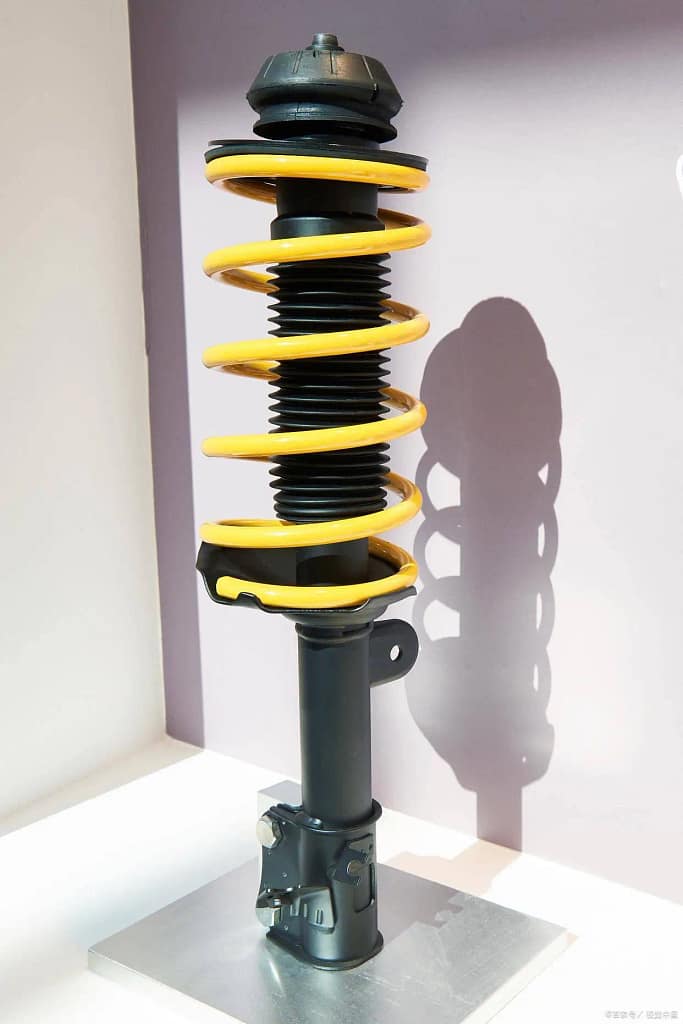
- Strut Assembly: A strut assembly is a much more complex structural component. It integrates the shock absorber into a single unit that also serves as a main structural pivot point for the wheel hub and steering. It supports the vehicle’s weight, provides a mounting point for the coil spring, and often includes the strut mount (or bearing plate) on top. Because it performs multiple functions, a strut assembly is always more expensive than a simple shock absorber.
The first step in getting an accurate quote is determining which part your vehicle requires. A professional inspection will confirm this. Replacing a shock with a strut assembly, or vice versa, is not only incorrect but also creates a safety hazard.
2. The Spectrum of Shock Absorber Technology and Quality
Once you know whether you need a shock or a strut, the price is determined by the technology and quality of the component we, the manufacturer, have engineered into it. This is where the real difference lies, and why a 50partisnotequivalenttoa50 part is not equivalent to a 50partisnotequivalenttoa200 part.
- Conventional Hydraulic Shocks: These are the most basic and often the least expensive type. They operate by forcing oil through small valving holes as the piston moves up and down. This simple design is cost-effective to manufacture and provides adequate damping for light-duty applications. However, they are prone to foaming and aeration when subjected to rapid, repeated stroking, which diminishes their performance and can lead to premature fade. They are typically Original Equipment (OE) on passenger cars focused on a baseline comfort level.
- Gas-Charged Shocks: This is a significant technological upgrade and the most common type in modern vehicles. They contain a pressurized gas, usually nitrogen, on one side of the piston (in a twin-tube design with a floating piston, or in the main tube of a monotube design). This pressurization serves two critical functions:
- Prevents Aeration: The pressure keeps the oil in a liquid state, preventing it from foaming and mixing with air. This ensures consistent damping performance, even under heavy use and over rough terrain.
- Improves Response: The gas pressure provides a secondary force that helps extend the shock, leading to better wheel control and a quicker “rebound” feel. This translates to improved handling, cornering stability, and a more controlled, less bouncy ride. The cost of the high-pressure gas charging system and the more advanced seals and materials required to contain it is a primary reason for their higher price.
- High-Performance, Adjustable, and Loaded Struts: At the premium end of the spectrum, the cost reflects even more advanced technology.
- High-Performance: These are designed for spirited driving and truck/SUV towing. They feature larger piston diameters, advanced valving, and more robust construction to handle higher heat loads and provide superior control and stability under extreme conditions. They are engineered for performance, not just comfort.
- Adjustable: These allow the driver to fine-tune the damping force to their preference or driving conditions. This is achieved through sophisticated external adjusters that change the size of the oil passages or the tension of internal components. This added complexity and engineering make them significantly more expensive.
- Loaded Struts: These are a convenient and time-saving option for consumers. A “loaded” strut assembly comes pre-assembled with the new shock absorber, coil spring, and, most importantly, a new strut mount and bearing plate already installed. While the upfront cost is higher than an “unloaded” strut where you reuse these parts, it is often the superior value. The original strut mount and bearing are wear items, and reusing old, worn-out parts is a common cause of clunking noises and continued instability. A loaded strut guarantees that all critical components are new, providing a complete and reliable repair, though the initial price is higher.
Section 2: The Cost of Labor and Your Vehicle’s Specifics
While the cost of the part is a major factor, it is only half of the equation. The cost of labor can dramatically influence the total price of the repair. This cost is not arbitrary; it is determined by the specific vehicle and the complexity of the job.
1. Labor Rates: The “Why” Behind the Per-Hour Cost
Local labor rates vary from one shop to another and can be influenced by geographic location, the shop’s overhead, and the expertise of the technicians. A dealership service department will typically have a higher labor rate than an independent repair shop. The average rate in the United States can range from 90to90 to 90to200 per hour. When you receive a quote, make sure you understand the shop’s labor rate.
2. The Complexity of the Job: A Factor of Time and Tools
Not all shock or strut replacements are created equal in terms of labor time. Some jobs are straightforward and can be completed in 30 minutes per wheel, while others can take over two hours.
- Time:
- Simple, Accessible Shocks: Replacing the shocks on a pickup truck with a live rear axle is often very straightforward. The component is out in the open, and there are few other systems in the way. This is a low-time, lower-labor-cost job.
- Complex Strut Jobs: Replacing struts, especially on front-wheel-drive and all-wheel-drive vehicles, is significantly more complex. The assembly is mounted deep within the wheel well and is often integrated with the steering knuckle, brake lines, and ABS sensors. This requires disassembly of other components and meticulous reassembly and alignment.
- Rust and Corrosion: In regions that use road salt in the winter, rust is the great equalizer and cost-inflator. Rusted bolts, seized nuts, and corroded mounting brackets can turn a simple job into an ordeal, requiring specialized tools, penetrating fluids, and significant extra labor time to break components free without damage.
- The Necessity of a Wheel Alignment: This is a mandatory, and costly, part of any front or four-wheel replacement job that involves struts or any other component that affects the vehicle’s suspension geometry. When the struts are removed, the camber, caster, and toe settings of the wheels are disturbed. Reinstalling them without performing a precise wheel alignment will result in poor handling, uneven and rapid tire wear, and a potentially unsafe vehicle. This is not an optional add-on; it is an essential part of the repair and should be included in any complete quote.
Conclusion: More Than a Price Tag – A Value Proposition
So, “How much should it cost to replace a shock absorber?” The answer, as we’ve established, is that it depends on a matrix of factors: whether it’s a shock or a strut, the type of technology (hydraulic, gas, high-performance), the quality of the component, and the labor required for your specific vehicle.
While a budget-conscious owner might be tempted by the lowest price, we, as the manufacturer, must emphasize that this is a classic case where you truly get what you pay for. The cost of a shock absorber is an investment in the fundamental safety, handling, and reliability of your vehicle. A low-quality part may save you money on the bill today, but it will likely need replacement again soon, will not provide the precise control needed for emergency maneuvers, and will cost you more in the long run through premature tire wear and reduced fuel efficiency.
A fair price for a shock or strut replacement reflects the quality of the engineering and materials in the component, the complexity of the labor involved, and the inclusion of essential services like a four-wheel alignment. An unrealisticly low quote often leaves something out: inferior parts, omitted alignment services, or underestimating the time required due to rust. When seeking a quote, focus not just on the bottom line, but on the breakdown of costs, the brand and type of parts being used, and the shop’s commitment to doing the job correctly and completely. A thorough and reasonably priced replacement is not an expense; it is an investment in your safety and peace of mind.