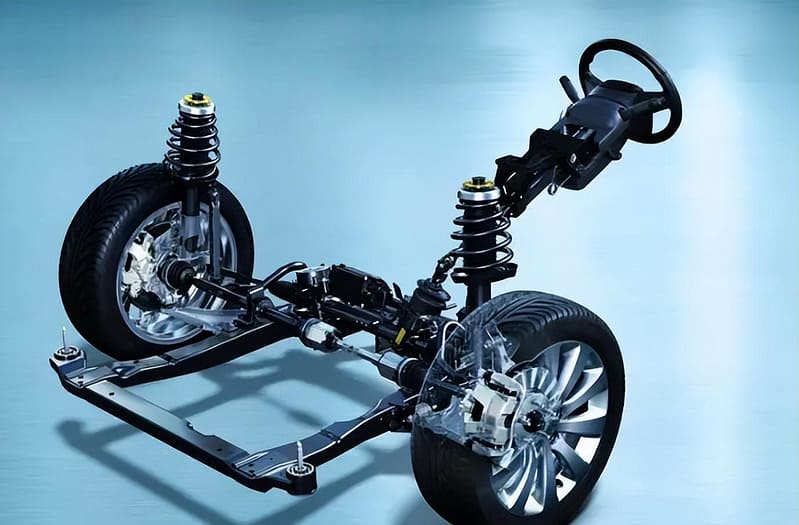
Meta Description: Discover the critical role of a ‘shock absorber car’ system. As a factory, we explain how a car’s shock absorbers control suspension motion, ensure tire contact, and guarantee safety, stability, and control. A definitive guide for drivers.
Introduction
When you think of the components that define a car’s performance, your mind might leap to the engine’s horsepower, the transmission’s smoothness, or the grip of the tires. Yet, nestled unassumingly within the chassis is a component whose influence on safety, stability, and control is more profound than most drivers realize. This brings us to a crucial topic: the shock absorber car. Often misunderstood as a simple comfort device, the reality is far more critical. So, what exactly is a shock absorber car system? From our perspective on the factory floor—where these components are engineered and tested for durability and precision—we offer a definitive answer. A shock absorber car is, at its core, a sophisticated safety system. It’s a velocity-sensitive hydraulic system designed to manage the suspension’s uncontrolled oscillations. While it contributes to ride comfort, its primary function is to ensure your vehicle’s tires maintain constant and unwavering contact with the road. In this comprehensive guide, we will dismantle the misconceptions and explore the multifaceted role of the shock absorber car, explaining why it is an unsung guardian of every drive.
Core Content
Section 1: Beyond the Comfort Myth: The True Function of a Shock Absorber Car
The most pervasive misconception about a shock absorber car system is its name itself. People believe a “shock absorber” is meant to cushion the blow from a bump. This is incorrect. The component that actually absorbs the initial impact of a road imperfection is the spring—the coil or leaf spring that compresses to store the kinetic energy.
The real danger lies in what happens after the impact. If a vehicle were equipped with only springs, after hitting a bump, the wheel would rebound, lifting the chassis, and then fall back down, only to rebound again. This chaotic bouncing would continue until all the energy was dissipated. A car without a proper shock absorber car would be nearly impossible to control.
So, what is the true function in a shock absorber car? The shock absorber acts as a “dampener” for this motion. It’s a hydraulic pump that resists the speed of the suspension movement. By forcing fluid through internal valves, it creates calibrated resistance. This controlled resistance prevents the suspension from oscillating and smoothly brings it back to its neutral position. Therefore, the core function of a shock absorber car is not to soften the hit, but to manage the recovery, ensuring a single, controlled movement instead of multiple dangerous bounces. This fundamental distinction is key to understanding the importance of a healthy shock absorber car system.
Section 2: The Safety Imperative: Maintaining Tire Contact in a Shock Absorber Car
The ultimate purpose of managing suspension motion in any shock absorber car is safety. The four small patches where your tires meet the pavement represent your vehicle’s only connection to the world. A shock absorber car system is engineered to protect that connection at all costs.
Every maneuver a driver performs—braking, accelerating, steering—depends on the friction generated at those four contact patches. Let’s explore how a shock absorber car system ensures this connection remains intact under various conditions:
- What a shock absorber car does during braking: When you brake hard in your car, weight shifts forward aggressively. A healthy shock absorber car system at the front resists this “dive,” keeping the nose from pitching down too sharply. This ensures the front tires stay firmly on the ground, allowing maximum braking force. A worn shock absorber car system, on the other hand, will cause excessive front dive, potentially unloading the rear tires and making the vehicle feel unstable and unpredictable.
- What a shock absorber car does during cornering: When taking a corner, the car’s weight shifts to the outside. A proper shock absorber car system resists the resulting body roll, keeping the vehicle more stable. This controlled roll helps maintain grip from all four tires. Without it, a car with a failing shock absorber car system will lean excessively, increasing the risk of rolling over or losing traction and spinning out.
- What a shock absorber car does on uneven surfaces: On a bumpy road, the wheels move up and down rapidly. The shock absorber car system damps this motion, ensuring the tires stay in contact with the road surface rather than bouncing off of it. This constant contact is what allows you to maintain steering control. A shock absorber car with worn shocks will feel “floaty” and unstable over bumps, as the wheels skip, losing vital traction.
In essence, a well-functioning shock absorber car system is your primary defense against losing control of your vehicle.
Section 3: The Dynamics of a Car: How a Shock Absorber Car Enhances Control and Comfort
While safety is paramount, the influence of a shock absorber car system extends to the overall driving experience. A healthy shock absorber car directly translates into a vehicle that feels responsive, solid, and well-planted.
- Enhanced Vehicle Control: When you ask a car with a good shock absorber car system to turn, it responds crisply and predictably. When you accelerate, it feels solid instead of squatting uncontrollably. This immediate and precise feedback between driver and machine is a hallmark of a well-tuned shock absorber car system. It gives the driver confidence to handle the vehicle at the limit.
- Improved Ride Quality: This is where the “comfort” myth has some truth. While not the primary goal, a damping shock absorber car system does contribute to a smoother ride. By filtering out the high-frequency vibrations and uncontrolled bouncing of the wheels, a high-quality shock absorber car system provides a comfortable ride without sacrificing the structural integrity or control. It’s a balance of comfort and capability.
- Reduced Wear and Tear: A shock absorber car system that is doing its job correctly protects other vehicle components. By preventing excessive suspension travel and harsh movements, it reduces stress on control arm bushings, ball joints, and wheel bearings, ultimately extending their lifespan. A good shock absorber car is a sign of a well-maintained and durable vehicle.
Section 4: The Engineering of Control: A Look Inside the Shock Absorber Car
To fully appreciate a shock absorber car system, it’s helpful to understand the engineering inside the shock absorber itself. From the factory, we build different types of shocks to meet specific performance demands.
- The Twin-Tube Shock Absorber Car: This is the most common design in standard vehicles. It has two tubes: an outer tube that acts as a reservoir and an inner tube where the piston operates. As the piston moves, it forces fluid through valving, creating resistance. This design is cost-effective and provides a good balance of comfort and performance for an everyday shock absorber car.
- The Monotube Shock Absorber Car: This design features a single, large cylinder. A floating piston separates the hydraulic oil from a pressurized charge of nitrogen gas. This design offers superior heat dissipation and is immune to performance-robbing aeration. It is found in high-performance, heavy-duty, and off-road shock absorber car applications where consistent performance under extreme stress is essential.
- Adaptive/Smart Shock Absorber Car Systems: This is the cutting edge of shock absorber car technology. Systems like Magnetic Ride Control use shocks filled with a magneto-rheological (MR) fluid—whose viscosity can be changed in milliseconds by an electric current. A smart shock absorber car like this can switch from plush to firm in real-time, offering the best of both worlds: comfort when cruising, and razor-sharp handling when needed.
Section 5: When to Service Your Shock Absorber Car: Warning Signs
A shock absorber car system degrades gradually, so it’s important to recognize the signs of failure. They include:
- The car continues to bounce after hitting a bump.
- Excessive “nose-dive” when braking.
- Noticeable body roll during cornering.
- A general feeling of instability or “wandering” on the highway.
- Leaking fluid on the shock body.
- Uneven tire wear patterns (often cupping or scalloping).
If your shock absorber car exhibits any of these symptoms, it’s crucial to have it inspected. It’s not a matter of comfort; it’s a critical safety issue.
Conclusion
In conclusion, the question of what defines a shock absorber car system has a clear and definitive answer from a manufacturer’s standpoint. It is far more than a component for ride comfort. It is a sophisticated safety device, a velocity-sensitive hydraulic system whose primary function is to control the suspension’s motion. By doing so, it ensures your vehicle’s tires maintain constant contact with the road, which is the single most important factor for vehicle control and safety. From stable braking to predictable cornering, the influence of a healthy shock absorber car system is felt in every aspect of driving. Understanding what makes a shock absorber car system effective is the first step to appreciating the engineering that goes into creating a vehicle that is not just fun to drive, but fundamentally safe. It is the unsung hero of every safe journey.