Meta Description: Shock absorber types can be confusing. As a manufacturer, we provide a detailed guide comparing Twin-Tube, Gas-Charged, Monotube, and Strut designs to help you choose the right type for performance, comfort, and load capacity.
Introduction
When it comes to vehicle maintenance and performance enhancement, few components are as critical yet as frequently misunderstood as the shock absorber. The name itself implies a singular function, but the reality is that shock absorber types vary dramatically in design, performance, and application. A driver seeking a smoother ride for their family sedan has vastly different needs than an off-road enthusiast tackling treacherous terrain or a race car engineer seeking maximum handling. As a manufacturer who has engineered and produced millions of these hydraulic damping systems, we recognize that the quality and selection of the right shock absorber types are paramount to vehicle safety, comfort, and longevity. This guide is designed to cut through the marketing jargon and provide a clear, authoritative breakdown of the most common shock absorber types. Understanding the engineering differences between them is the first and most important step toward making an informed decision for any vehicle.
Core Content
Section 1: The Fundamental Principle – The Foundation of All Shock Absorber Types
Before diving into the specific shock absorber types, it is essential to understand the core principle that unites them all. Despite their various designs and names, every shock absorber is fundamentally a hydraulic damping device. Its primary purpose is to convert the kinetic energy from the suspension’s movement into heat, which is then dissipated into the atmosphere.
This process is achieved through a simple yet effective mechanism: a piston moving through a cylinder filled with hydraulic fluid. The piston features precisely calibrated orifices and valves. As the suspension moves (up or down), the piston rod forces the piston to travel within the cylinder, compressing the fluid on one side and creating a vacuum on the other. The fluid is then forced to pass through these tiny orifices. The resistance it encounters as it flows is what creates the damping force, slowing down the motion of the suspension.
All variations of shock absorber types are essentially sophisticated evolutions of this basic principle, engineered to overcome specific limitations and optimize performance for different driving conditions.
Section 2: The Twin-Tube Shock Absorber – The Classic Workhorse
The Twin-Tube design is the most traditional and common type of shock absorber, serving as a reliable and cost-effective solution for a vast number of standard passenger vehicles. It is often found as the original equipment (OEM) for sedans, minivans, and light trucks prioritizing a comfortable ride.
Design & Construction: As the name implies, the Twin-Tube shock absorber consists of two nested, cylindrical tubes.
- Inner Tube: Also known as the pressure tube, this is the main cylinder that contains a piston rod and piston. It’s filled with hydraulic damping fluid.
- Outer Tube: Also called the reserve tube, this tube surrounds the inner tube. It contains a volume of hydraulic fluid and a low-pressure charge of nitrogen gas (in gas-charged versions) or is simply filled with additional fluid (in hydraulic versions).
How it Works: When the suspension moves in compression, the piston travels down the inner tube, forcing fluid through the compression valves. As the wheel rebounds, the piston travels up the piston rod, and fluid must pass through the rebound valves. The reserve tube provides a supply of extra fluid to compensate for the volume displaced by the piston rod as it enters the cylinder.
Variations within Twin-Tube Types:
- Conventional Hydraulic Twin-Tube: The simplest design. It uses only hydraulic fluid and the nitrogen gas charge in the reserve tube is very low or absent. It provides a good ride for normal conditions but is susceptible to performance fade under heavy use or high-speed operation.
- Gas-Charged Twin-Tube: This is a significant improvement and represents a major evolution in Twin-Tube shock absorber types. It features a charge of high-pressure (around 100-150 PSI) nitrogen gas in the reserve tube. This gas charge pressurizes the entire system, which serves two critical functions:
- Foam Control (Aeration): The primary benefit. Under heavy use, the fluid’s heat can cause it to foam, forming air bubbles. Foamy, aerated fluid is compressible and loses its ability to effectively dampen movement, causing a spongy feel and performance loss (fade). The gas charge prevents this foaming, maintaining consistent damping performance even when hot.
- Pedal Feel Improvement (for vehicles with struts): The pressurized fluid helps reduce the initial “spongy” feel often associated with conventional hydraulic dampers.
Pros:
- Cost-effective to manufacture.
- Inherently quiet operation.
- Generally prioritizes ride comfort over sporty handling.
- Reliable and durable for standard applications.
Cons:
- Larger in diameter, which can be a packaging concern.
- More susceptible to heat buildup fade than more advanced designs.
- Performance can be compromised if the outer tube is punctured.
Section 3: The Monotube Shock Absorber – The Performance Standard
For high-performance vehicles, off-road rigs, and applications demanding superior heat dissipation and fade resistance, the Monotube design reigns supreme. If Twin-Tube is the workhorse, Monotube is the elite athlete of shock absorber types.
Design & Construction: A Monotube shock absorber consists of a single, large-diameter pressure tube. Inside, a floating piston separates the oil from a high-pressure (250-300+ PSI) nitrogen gas charge. The piston rod and damping piston are located on the oil side of this floating piston.
How it Works: The design ingeniously separates the two functions of damping and gas pressurization.
- Damping: The movement of the wheel and suspension causes the piston rod, and the piston attached to it, to move up and down within the oil, forcing it through the valving. This is exactly like a Twin-Tube shock absorber.
- Gas & Heat Management: The high-pressure nitrogen charge is on the other side of the floating piston. As the fluid heats up during aggressive use and expands, the floating piston simply moves, compressing the nitrogen gas. This gas acts like a large, efficient heat exchanger, absorbing heat from the oil and transferring it to the outer tube of the shock, where it can be radiated into the air very effectively. This exceptional ability to dissipate heat prevents the fluid from overheating and foaming, eliminating fade.
Pros:
- Superior Heat Dissipation: Its best feature. No other design sheds heat as effectively, making it ideal for racing, towing, and aggressive off-roading.
- Excellent Fade Resistance: Consistent performance even under extreme conditions.
- Improved Handling & Response: More direct feel due to efficient valving and less internal friction.
- More Efficient Packaging: The single, large tube is often easier to fit within tight suspension architectures.
Cons:
- More expensive to manufacture.
- Can transmit more high-frequency road noise to the chassis.
- While rugged, a dent or puncture in the single body tube can render it a total loss.
Section 4: The Shock Strut – An Integrated Suspension Component
It’s crucial to understand that a Strut is not a distinct type of shock absorber in the same way as Twin-Tube or Monotube. Rather, a Strut is a structural suspension component that incorporates a shock absorber. The confusion often arises because many people refer to the entire assembly as a “strut,” when in fact, the shock absorber is just one part of it.
Design & How it Works: A Strut assembly integrates several key suspension functions into one unit:
- Shock Absorber: A shock absorber (either Twin-Tube or Monotube design) is built into the center of the assembly.
- Coil Spring: The spring that supports the vehicle’s weight is mounted around the body of the shock absorber.
- Spring Seat: A plate at the top of the strut that holds the coil spring in place.
- Strut Bearing: A bearing at the very top of the assembly that allows the steering knuckle to pivot as the wheel turns.
- Steering Knuckle: The part at the bottom that the wheel and brake assembly attach to.
Because the Strut itself bears the vehicle’s weight and acts as the main pivot point for the wheel’s movement, the shock absorber inside does not need to handle structural loads, allowing it to be optimized purely for its damping function. A vehicle with a strut front suspension does not have a separate upper control arm.
Struts are a common design for the front suspension of most modern cars and trucks. They are favored by manufacturers for their compact packaging and because they simplify the suspension architecture by combining functions. A common upgrade is a “strut mount” replacement, which is essentially the top bearing and plate of the assembly.
Section 5: Specialty Shock Absorber Types
While the categories above cover the vast majority of applications, several other specialized shock absorber types exist for niche but demanding purposes.
- Coilover Shocks: A “Coilover” is short for “Coil Spring Over.” It’s a performance-oriented design where a shock absorber and a specially matched, often adjustable, coil spring are sold as a pre-assembled unit. The spring is mounted directly over the shock absorber. This configuration is extremely common in performance vehicles, motorsports, and the aftermarket scene due to its superior adjustability and space efficiency.
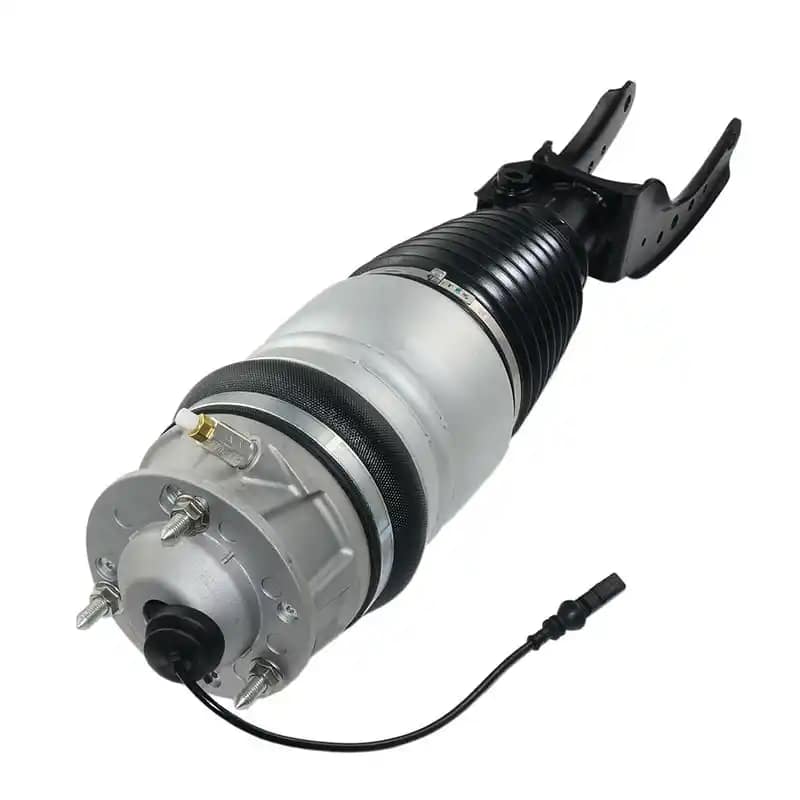
- Air Shocks: These are highly specialized shocks that contain an air bladder in addition to the hydraulic system. The air pressure can be adjusted externally, typically via an air compressor, to increase the load-carrying capacity of the vehicle. They are designed for heavy-duty applications like towing or hauling heavy loads with a vehicle that was not originally equipped for it.
Conclusion: Choosing the Right Type for Your Vehicle
Understanding the different shock absorber types is not merely an academic exercise; it is a practical necessity for anyone looking to optimize their vehicle’s performance, safety, and comfort. From the cost-effective and quiet comfort of the Gas-Charged Twin-Tube, a staple of daily drivers, to the heat-defying performance of the Monotube shock absorber favored by racers and off-roaders, each design represents a series of engineering trade-offs. The Shock Strut stands as a testament to integrated design, combining damping function with critical structural support. As a manufacturer, our final recommendation is this: the best shock absorber type for you depends entirely on your vehicle, your driving style, and your performance goals. Match the engineering of the component to the demands you place upon your vehicle, and you will unlock a new level of handling, safety, and ride quality.