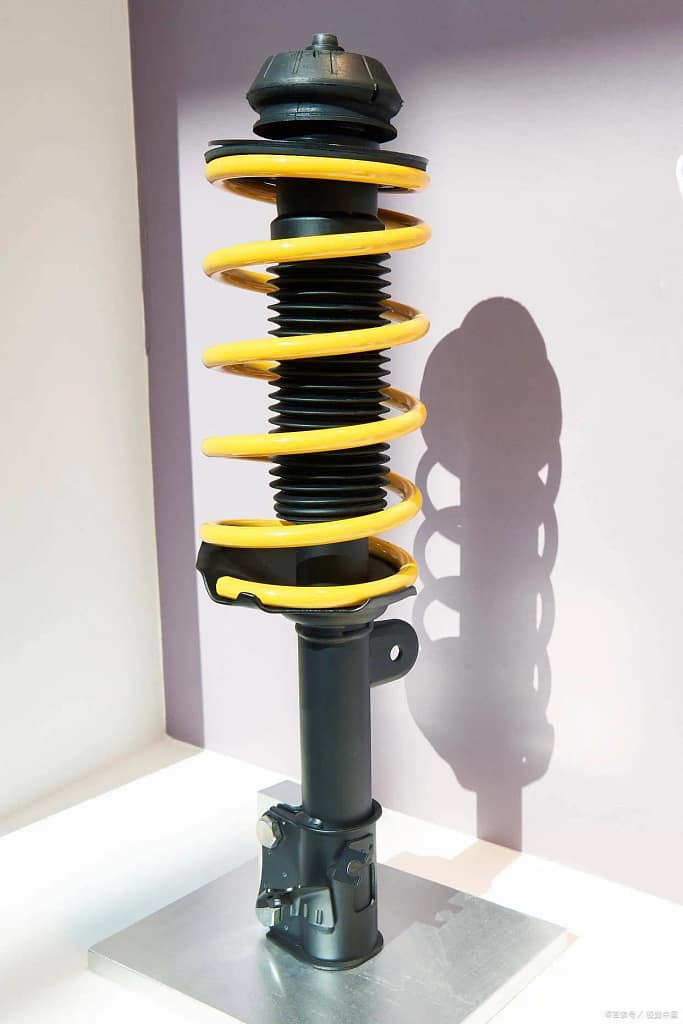
Meta Description: Searching for a comprehensive ‘types of shock absorbers pdf’? Our definitive guide provides a professional, in-depth breakdown of every major type. Learn how to identify the right shock absorber for your application, featuring expert diagrams and technical explanations.
Introduction
When an engineer, mechanic, or procurement specialist queries for “types of shock absorbers pdf,” they are not just looking for a simple list. They are seeking a technical reference document, a trustworthy resource that provides authoritative, clear, and detailed information to inform a critical decision. As a manufacturer specializing in precision hydraulic damping systems, we understand the importance of this search. Choosing the correct shock absorber is fundamental to the performance, safety, and longevity of any system—be it a high-performance vehicle, a heavy-duty truck, a piece of industrial machinery, or a vibration-sensitive piece of medical equipment. The wrong choice can lead to poor handling, component fatigue, catastrophic failure, and unnecessary costs.
In this comprehensive guide, we step into the role of that sought-after PDF. We will systematically deconstruct the various types of shock absorbers, explaining their unique operating principles, applications, advantages, and disadvantages. Our goal is to provide the definitive technical breakdown you’ve been searching for, empowering you to make an informed selection for your specific needs. So, let’s explore the world of types of shock absorbers, moving beyond the basics to the core engineering details that define them.
Core Content
Section 1: The Foundation – Understanding the Core Principle All Types of Shock Absorbers Share
Before diving into the various types of shock absorbers, it is essential to understand the fundamental principle that governs their operation. At its core, every shock absorber is a velocity-sensitive hydraulic damper. Its primary function is not to absorb “shocks” in the way a sponge absorbs water, but to dampen the suspension’s motion.
Think of a vehicle’s suspension system. The springs (coil springs, leaf springs, torsion bars) are responsible for supporting the vehicle’s weight and absorbing the initial impact of a road imperfection. When the spring compresses and rebounds, it stores and releases energy, causing the wheel to oscillate. If left uncontrolled, this oscillation would continue for several cycles, lifting the wheel off the road and making the vehicle unstable.
This is precisely where a shock absorber comes in. It is essentially a precision pump. It consists of a piston moving within a cylinder filled with hydraulic fluid. As the suspension moves, the piston forces the fluid to flow through tiny, calibrated internal valves. The resistance the fluid encounters as it’s forced through these narrow orifices converts the kinetic energy of the suspension’s motion into heat, which is then dissipated into the atmosphere.
The key term here is velocity-sensitive. The faster the piston moves (i.e., the faster the wheel is bouncing), the more pressure it creates, and the greater the resistance. This means the shock absorber offers more resistance to a sharp, jarring impact than it does to a slow, gentle suspension movement. This self-adjusting nature is what makes a shock absorber so effective at controlling the spring. Understanding this core principle is the key to comprehending how all subsequent types of shock absorbers differentiate themselves.
Section 2: Major Classification 1 – Fundamental Designs (Gas vs. Fluid)
All types of shock absorbers can be broadly classified into two fundamental design categories: conventional hydraulic (fluid) and gas-charged. This is one of the most significant distinctions in their design.
A. Twin-Tube Shock Absorbers (Conventional Hydraulic)
The twin-tube design is one of the most common types of shock absorbers, primarily used in standard passenger cars and light trucks.
- Structure: As the name implies, it consists of two nested tubes. The inner tube, also called the pressure tube, is where the main piston rod and piston operate. The outer tube is a fluid reservoir. This air space in the outer tube above the fluid is the first differentiator.
- Operation: When the piston rod extends (jounce), it pushes fluid out of the inner tube into the outer reservoir. When the piston rod retracts (rebound), fluid is drawn from the outer reservoir back into the inner tube.
- Advantages:
- Cost-Effective: Relatively simple and inexpensive to manufacture.
- Good Low-Speed Damping: Provides a comfortable ride under normal driving conditions.
- Disadvantages:
- Aeration: The main drawback is the potential for aeration. When the shock heats up, the fluid in the outer reservoir begins to foaming/foaming. This foam can be drawn back into the inner tube, mixing with the hydraulic fluid and causing it to become compressible. When a fluid becomes compressible, the shock absorber loses its ability to effectively control the suspension. This phenomenon, known as “shock fade,” leads to a harsh, bouncy ride and poor handling, especially during demanding driving.
- High-Speed Performance Limitations: Due to aeration and a simpler internal design, twin-tube shocks can struggle during intense, repeated use.
B. Monotube Shock Absorbers (High-Performance Gas-Charged)
The monotube design represents an evolution in shock absorber technology, offering superior performance and consistency.
- Structure: This design consists of a single, large, seamless tube. It is pressurized with high-pressure nitrogen gas (typically 100-250 PSI) that is separated from the hydraulic fluid by a floating piston.
- Operation: The floating piston divides the tube into two chambers. The lower chamber contains the hydraulic fluid, while the upper chamber holds the high-pressure nitrogen gas. As the shock moves, the fluid displaces the floating piston, compressing the nitrogen gas on the other side.
- Advantages:
- Superior Heat Dissipation: The single, large surface area and pressurized gas allow for far more efficient heat transfer to the atmosphere, minimizing operating temperatures.
- Fade Resistance: By separating the gas from the fluid, aeration is virtually eliminated. This means the shock maintains consistent damping performance, even under extreme conditions like heavy towing, off-roading, or racing.
- High-Speed Stability: The gas pressure provides a more progressive feel and better control over high-speed suspension movements.
- Disadvantages:
- More Expensive: More complex to manufacture, leading to a higher cost.
- Sensitive to Damage: The single wall is generally more susceptible to damage from road debris compared to the redundant wall of a twin-tube design.
Section 3: Major Classification 2 – Adaptive & Performance-Oriented Types of Shock Absorbers
Beyond the fundamental fluid vs. gas distinction, manufacturers have created specialized types of shock absorbers to meet specific performance demands. These systems offer dynamic adjustability or are optimized for particular tasks.
A. Adjustable Shock Absorbers
These types of shock absorbers allow the driver or technician to adjust the damping rate, typically with an external dial or knob. The adjustment usually involves changing the size or shape of the fluid passages within the valves.
- Applications: Popular in performance cars, off-road vehicles, and trucks where different driving conditions (e.g., street vs. track, highway vs. trails) require different handling characteristics.
- Types of Adjustability:
- Single Adjustable: Typically adjust only the rebound damping.
- Dual/Triple Adjustable: Can adjust both compression and rebound damping independently, offering a greater level of tuning.
- Advantages: Provides versatility, allowing the vehicle’s suspension to be tuned for either comfort or performance.
B. Smart / Electronic Shock Absorbers (Semi-Active Dampers)
These are the most technologically advanced types of shock absorbers. Instead of manual adjustment, they are controlled electronically by the vehicle’s main computer system, often called a suspension control module.
- Technology: These shocks contain sensors that measure inputs such as road surface, vehicle speed, steering angle, and braking force. The system then adjusts the damping characteristics in milliseconds.
- Popular Examples: General Motors’ Magnetic Ride Control and Ford’s Interactive Vehicle Technologies (IVT).
- Magnetic Ride Control: This system uses shocks filled with a magneto-rheological fluid—a fluid containing tiny, iron-coated particles. An electromagnetic coil surrounding the shock adjusts the viscosity of the fluid in real-time, allowing for an almost instantaneous change in damping firmness.
- Advantages: Offers the “best of both worlds,” providing a soft, comfortable ride during normal driving and a firm, sporty or stable ride during aggressive cornering or emergency maneuvers. This is especially critical in truck applications for preventing trailer sway or reducing body roll.
Section 4: Application-Specific Types of Shock Absorbers
Different vehicles and machinery demand specific solutions, leading to application-optimized types of shock absorbers.
A. Truck & SUV Shock Absorbers
These types of shock absorbers are engineered for high loads, towing stability, and performance on rugged terrain.
- Design Features: They often incorporate larger pistons and more robust cylinder walls to handle the tremendous forces involved. Valving is specifically tuned to resist body roll, manage heavy rear-end squat under acceleration, and prevent trailer sway. Heavy-duty versions are exclusively monotube designs for fade resistance.
B. Motorcycle Shock Absorbers
Motorcycle suspension is unique due to the chassis’s orientation and the forces involved.
- Types: Primarily, you’ll find Telescopic Forks (a type of shock) and Monoshock/Remote Reservoir rear dampers. The rear shocks often have remote reservoirs to separate the gas from the fluid for superior heat management and prevent heating from the exhaust.
C. Industrial Shock Absorbers
This category covers a vast range of applications beyond transportation.
- Applications: Conveyor systems, robotic arms, door dampers, heavy machinery, and vibration isolation for sensitive equipment like disk drives or surgical tables.
- Design Principles: The core principle of energy dissipation remains, but the materials and designs vary widely. Pneumatic, gas-charged, and specialized hydraulic variants are common. Unlike vehicle shocks, many industrial dampers are designed for a one-time, single-cycle stroke to absorb a high-impact shock, not for continuous oscillation.
Conclusion
The world of types of shock absorbers is diverse, but every design shares a common goal: to control motion and dissipate energy. We began by exploring the fundamental hydraulic principle that governs all dampers. We then classified them into two primary families: the cost-effective Twin-Tube and the high-performance Monotube. Finally, we examined application-specific and adaptive types of shock absorbers, including Adjustable shocks and advanced Smart systems like Magnetic Ride Control.
The choice of which type is optimal depends entirely on the specific application’s requirements for performance, safety, and cost. For a standard commuter car, a robust Twin-Tube may be perfectly suited. For a high-performance sports car, a heavy-duty Monotube with adjustability is essential. For a truck towing a heavy trailer, a smart, gas-charged system is the benchmark for safety and stability. Understanding the differences between these types of shock absorbers is not just academic knowledge; it is the key to engineering solutions that perform effectively and reliably under their intended load and operating conditions.