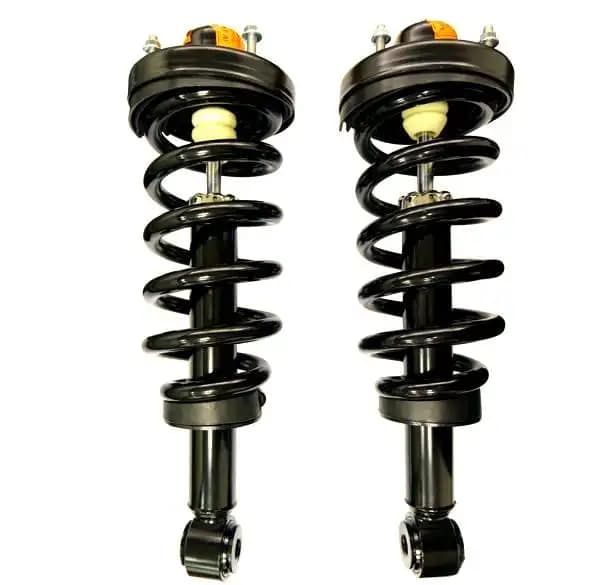
Meta Description: What are shock absorbers on a car? As the manufacturer, we provide the definitive answer. Learn how these crucial components function as motion control devices, ensuring tire contact, safety, and vehicle longevity. Explore our expert breakdown.
Introduction
Every journey, whether a daily commute or a long-haul adventure, rests upon a foundation of safety, comfort, and control. While most drivers are familiar with the glaring presence of a tire or the roar of an engine, there exists a set of vital components working silently in the background to make every mile possible. These components are the shock absorbers, yet their identity remains a mystery to many. When asked, “what are shock absorbers on a car?” the common, and often misleading, response is, “They make the ride smooth.” While comfort is a welcome byproduct, this definition barely scratches the surface of their intricate engineering and paramount importance to vehicle dynamics.
From our vantage point on the factory floor, where every component is forged and tested under the most rigorous conditions, we define these parts with unambiguous precision. So, what are shock absorbers on a car? They are sophisticated, velocity-sensitive hydraulic damping devices that are fundamental to motion control. Their primary purpose is to manage the energy of the springs, preventing them from rebounding uncontrollably. This controlled management is the bedrock of safety, as it ensures the tires maintain constant and critical contact with the road. This article peels back the layers of this misunderstood component, providing an authoritative, factory-level explanation of what shock absorbers are, how they function, and why their role is non-negotiable in the modern vehicle.
Core Content
Section 1: Defining the Component: What Are Shock Absorbers in Essence?
To truly comprehend what are shock absorbers on a car, we must move beyond the simple label. At their core, shock absorbers are dampers, not absorbers. This distinction is the single most important concept to understand. They do not absorb the initial impact of a bump—that is the specific job of the suspension springs. Instead, they absorb and dissipate the kinetic energy generated by the spring’s movement.
Imagine a pogo stick. The spring allows you to bounce, but without a damping mechanism, you would oscillate uncontrollably after each jump. The shock absorber acts as the essential brake on that pogo stick, smoothing out the bounce to a single, controlled motion. This is the fundamental truth of what are shock absorbers on a car: they are the regulators of suspension movement.
The term “shock absorber” is a legacy name. More technically accurate terms include “damper” or “shock damper.” These terms better describe their function of dampening energy. They are hydraulic devices, meaning they use a specially formulated, non-compressible oil as their medium for work. This oil is forced through a series of precisely engineered valves, which create the resistance needed to control the suspension’s up-and-down movement.
Furthermore, they are velocity-sensitive. This means the amount of resistance they provide is directly proportional to the speed of their movement. A gentle, slow bump (low velocity) will encounter a small amount of resistance, allowing for a comfortable ride. A sharp, jarring hit (high velocity) will generate much higher pressure in the oil, forcing it through smaller valve openings to provide greater resistance and control the harsh impact. This intelligent, adaptive behavior is what allows a single shock absorber to handle a wide range of road conditions and driving styles.
Section 2: The Critical Functional Role: The Safety, Stability, and Longevity Triad
Now that we have defined what shock absorbers are, it is crucial to understand the functions they perform. These functions are not luxuries; they are necessities for safe operation. The primary role of what are shock absorbers on a car can be distilled into three key areas.
1. Maintaining Tire-to-Road Contact: The Cornerstone of Safety
This is the single most critical function and the ultimate reason why these components are indispensable. The four small patches where your tires meet the road are the only connection your vehicle has with the world. Every action—accelerating, braking, steering—is dependent on the friction generated at these four contact patches.
- During braking, the vehicle’s weight shifts forward. Worn rear shock absorbers cannot control this weight transfer, causing the rear end to squat excessively and potentially leading to loss of control during a panic stop.
- During cornering, centrifugal force causes the vehicle body to roll. Worn shock absorbers cannot resist this roll, leading to body sway that can destabilize the vehicle and reduce tire grip, especially on the inside tires.
- When accelerating, weight transfers to the rear. Insufficient control can cause the front end to “lift” unnaturally, compromising steering precision.
In all these scenarios, the shock absorber’s function is to ensure the tire remains pressed firmly against the pavement. A tire that has lost contact cannot perform its function, whether it is stopping the car, changing its direction, or propelling it forward. This is why understanding what are shock absorbers on a car is directly linked to understanding vehicle safety.
2. Enhancing Vehicle Control and Ride Quality
Beyond the absolute necessity of safety, the functions of shock absorbers extend significantly to vehicle control and comfort.
- Reducing Body Roll: By providing resistance to chassis movement during cornering, shock absorbers keep the vehicle flatter. This maintains better tire geometry, improves the driver’s sense of the vehicle’s limits, and inspires confidence. Flat cornering is a hallmark of a well-controlled chassis.
- Minimizing Braking Nose-Dive: While controlled braking is desirable, an excessive lurch forward can unsettle the vehicle and reduce the effectiveness of the front tires in applying stopping power. Well-tuned shock absorbers manage this weight transfer smoothly.
- Improving Road Isolation: This is the misunderstood “comfort” aspect. By controlling high-frequency vibrations from the road before they can be transferred into the passenger cabin, shock absorbers contribute to a smoother, quieter, and more refined ride. They eliminate the “bouncing” and “wallowing” that makes a car feel dated or unrefined.
3. Protecting Vehicle Components and Ensuring Longevity
The functions of shock absorbers extend to protecting the vehicle itself. Every uncontrolled suspension movement creates a ripple effect of stress throughout the chassis.
Worn shock absorbers place excessive and irregular strain on other, more expensive parts of the suspension and steering systems. This includes:
- Control arm bushings
- Ball joints
- Tie rod ends
- Struts (if the car uses MacPherson struts)
- The springs themselves
By controlling this energy, a healthy set of shock absorbers prevents premature wear on these components, indirectly protecting the owner’s investment and reducing the total cost of vehicle ownership. This protective function is a key reason why technicians recommend replacing all four shock absorbers at the same time, even if only one is visibly leaking or damaged—it ensures even performance and protects the entire system.
Section 3: The Anatomy and Operation: The Science Behind the Function
A complete understanding of what are shock absorbers on a car requires a glimpse into their design. While they vary in construction, the core principles are universal.
1. Primary Types: Twin-Tube vs. Monotube
- Twin-Tube: This is the most common design, especially in standard passenger vehicles. It consists of an outer reservoir tube and a smaller inner pressure tube. The piston and rod move in the inner tube, while fluid and, in many cases, low-pressure nitrogen gas are stored in the outer tube.
- Monotube: This is a high-performance design used extensively in sports cars, trucks, and SUVs. It consists of a single, large-diameter tube with a floating piston separating the hydraulic oil from a high-pressure (350+ psi) charge of nitrogen gas. This design prevents “foaming” (where air and fluid mix under heavy use), leading to more consistent performance and superior heat dissipation.
2. The Core Mechanism: The Piston and Valving
Inside the pressure tube moves the piston rod assembly, which terminates in a piston. This piston is the heart of the damper. It is drilled with precise holes that house a complex system of shims, washers, and spring-loaded valves.
- Compression Stroke (when the wheel hits a bump): The suspension is compressed, pushing the piston rod and piston down the tube. This forces fluid through the compression valves in the piston head.
- Rebound Stroke (as the spring returns to its original length): The spring expands, pulling the piston and rod back up the tube. This forces fluid through the rebound valves, which are deliberately much stiffer than the compression valves.
This difference in valving is critical. The stiffer rebound damping prevents the suspension from extending too quickly, which would cause the wheel to hop off the road and lead to instability. The function of what are shock absorbers on a car is therefore a continuous cycle of controlling both compression and extension, with a primary emphasis on managing the spring’s energy during rebound.
Section 4: Recognizing the Signs of Failure and the Evolution of Technology
Knowing what are shock absorbers on a car also involves recognizing when they are no longer performing their functions effectively.
Common failure signs include:
- Excessive bouncing or “porpoising” after a bump
- Longer braking distances
- Nose-diving or rear-end squatting during braking/acceleration
- Body roll in turns
- Uneven or cupped tire wear
- Leaking fluid
The technology of these components has also evolved significantly. Adaptive or semi-active shock absorbers are now found on many modern vehicles. These use sensors to monitor road conditions and driving style. An onboard computer can then adjust the damping characteristics in real-time, often by magnetically altering the viscosity of the fluid (Magnetic Ride Control) or by using computer-controlled solenoids. This allows a vehicle to switch seamlessly from a comfortable, plush ride to a razor-sharp, sporty handling mode at the touch of a button, elevating the function from passive response to active control.
Conclusion
In conclusion, the answer to what are shock absorbers on a car is multifaceted and profound. They are not simple comfort devices but are highly engineered, critical safety components. They are motion control devices that manage spring oscillations, ensuring tire contact with the road—this is their defining function. Through this control, they are the foundation of safe braking, predictable handling, and vehicle stability, while also protecting the chassis from premature wear. Therefore, appreciating what shock absorbers are on a car is to appreciate the silent yet heroic work they do to keep you safe and in control, every single mile.