Meta Description: Ever ask, “what are shock absorbers on a car?” Discover the critical role these components play in safety, handling, and tire wear. Our factory experts explain how they work, why they differ from struts, and why maintaining them is non-negotiable. #shockabsorbers #suspensionsystem #cardesign #autorepair #vehiclemaintenance
Introduction
From the vantage point of our manufacturing facility, where raw steel is transformed into the intricate components that govern a vehicle’s behavior, we field a question that seems simple yet holds immense significance for vehicle dynamics and safety: what are shock absorbers on a car? It’s a query that reveals a common misconception in the public consciousness. To many, shock absorbers are the “comfort givers”—the parts responsible for smoothing out a bumpy road. While this perception isn’t entirely wrong, it’s a vast oversimplification of their critical, safety-first function.
As the hands that forge and assemble these vital parts, we understand that the true answer to what are shock absorbers on a car is rooted in physics and engineering, not just subjective comfort. Their role is far more fundamental and urgent than simply ensuring a pleasant ride. When a driver asks, what are shock absorbers on a car, they are unknowingly asking about one of the most crucial links in the chain of vehicle control. A proper understanding of what are shock absorbers on a car means recognizing them as the unsung heroes of tire-road contact, braking efficiency, and overall stability.
This guide is our definitive answer. Drawing from decades of experience in designing and manufacturing suspension components, we will demystify the purpose, design, and operational principles of shock absorbers. We will explore the often-confused distinction between them and other parts like struts, and we will detail the real-world consequences of their failure. By the end of this article, the question what are shock absorbers on a car will be answered not with a simple platitude, but with a deep, technical appreciation for a component that is absolutely integral to your safety on the road.
Core Content
Section 1: The Fundamental Answer: What Are Shock Absorbers on a Car, Really?
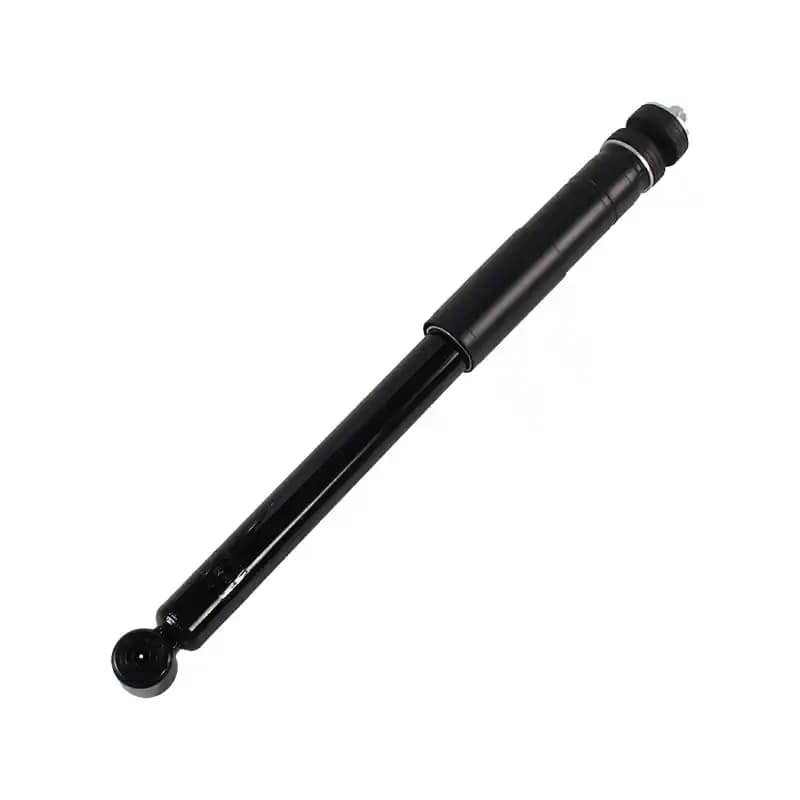
Let’s begin with a precise, no-nonsense definition. So, what are shock absorbers on a car? On a functional level, they are velocity-sensitive hydraulic devices designed to control, or “dampen,” the movement of a vehicle’s suspension springs.
This definition is key because it highlights the most critical concept: shock absorbers do not support the vehicle’s weight. That fundamental responsibility falls to the springs. Instead, they manage the energy that the springs store and release. To truly understand what are shock absorbers on a car, you must understand this relationship.
Imagine dropping a heavy ball. It hits the ground, compresses slightly, and then rebounds, bouncing multiple times before coming to rest. The suspension springs on your car behave in a similar way when you hit a bump; they compress and rebound. Without a shock absorber, this rebound would be violent and uncontrolled, causing the vehicle to bounce excessively like a pogo stick. What are shock absorbers on a car in this context? They are the mechanism that stops the bouncing.
So, when we explain what are shock absorbers on a car to our engineers-in-training, we frame it like this: They convert the kinetic energy of the suspension’s movement into thermal energy (heat), which is then dissipated into the atmosphere. This controlled dissipation of energy is what keeps the wheels firmly planted on the pavement.
This brings us to the most crucial clarification about what are shock absorbers on a car: Their primary objective is safety and vehicle control. A comfortable ride is a beneficial byproduct of this primary function, but it is not the reason they exist. A vehicle with completely worn-out shock absorbers may still feel subjectively “smooth” over certain bumps, but it will be dangerously unstable in emergency maneuvers, during hard braking, or in crosswinds. Understanding that what are shock absorbers on a car is fundamentally about control, not just comfort, is the most important takeaway for any vehicle owner.
Section 2: The Engineering Deep Dive: How Shock Absorbers Function
While knowing what shock absorbers do is essential, understanding how they do it provides a complete picture of what are shock absorbers on a car from an engineering perspective. As the manufacturer, we can attest to the incredible precision and refinement that goes into their construction.
1. The Core Mechanism: Fluid Dis Through Valving The inside of a shock absorber is a masterclass in fluid dynamics. It consists of a pressurized cylinder filled with a specially formulated hydraulic oil. Running through the center of this cylinder is a piston rod attached to a piston assembly.
When a wheel encounters a bump, the suspension is pushed upwards. This motion forces the piston rod into the cylinder, compressing the hydraulic oil. This pressurized oil has nowhere to go but through a series of precisely calibrated holes or valving circuits within the piston. The act of forcing the oil through these small, tight orifices generates the resistance that dampens the suspension movement. The energy from the road impact is not stored; it is converted into heat by the shearing action of the fluid.
2. The Genius of Design: Different Valving for Different Purposes A key part of understanding what are shock absorbers on a car is appreciating their tunable nature. The “shock” in a shock absorber isn’t just a single force; it’s a complex interaction of different types of motion. That’s why the valving inside a piston is engineered to manage multiple forces, each with a specific job:
- Compression Valving: This controls how quickly the suspension compresses when hitting a bump. For a luxury sedan, this valving might be soft for a plush ride, while for a performance SUV, it would be much firmer to resist bottoming out.
- Rebound Valving: This controls how quickly the suspension returns to its normal position after a bump. Rebound control is arguably even more critical than compression. If rebound is too fast, the tire can “chatter” and hop off the pavement. If it’s too slow, the car will feel “floaty” and wallowy, with poor weight transfer response.
At our factory, our R&D teams spend countless hours, using advanced dynamometers and simulation software, optimizing these valving circuits for every vehicle application. This is the science behind “tuning” a shock absorber.
3. The Evolution: High-Performance Gas-Charging Early shock absorbers (commonly known as “dampers”) were simple hydraulic units. However, they had a significant flaw: they could suffer from “aeration” or “foaming,” where the oil and air mixed, especially during high-speed or repetitive use, resulting in a sudden loss of damping ability.
This led to the development of gas-charged shock absorbers, which are now the standard. What are shock absorbers on a car today? They are sealed units that contain a high-pressure charge of nitrogen gas, pressurized to several hundred pounds per square inch (psi). This pressure serves two critical functions:
- It prevents oil foaming, ensuring consistent performance and eliminating the problem of shock fade.
- It improves the “response” of the shock absorber, making it feel more connected and controlled. The most advanced design is the monotube shock absorber, which uses a floating piston to separate the high-pressure nitrogen gas from the hydraulic oil. This design offers superior heat dissipation and the most consistent damping control, which is why it’s often used in high-performance and off-road applications.
Section 3: Differentiating the Components: What Are Shock Absorbers on a Car vs. Struts and Springs?
A common point of confusion for consumers is the difference between shock absorbers and other parts like struts and springs. A complete answer to what are shock absorbers on a car requires clarifying these distinctions.
1. What Are Shock Absorbers on a Car vs. Springs? This is the most fundamental distinction.
- Springs: Their job is to support the weight of the vehicle and absorb the initial impact of a bump, storing and releasing energy.
- Shock Absorbers: Their job is to control the release of that energy. They take the “bounce” out of the spring. In essence, the spring loads, and the shock absorber unloads. They work as a team but are entirely separate components with different functions. When you ask what are shock absorbers on a car, you are referring to the damping component of that team.
2. What Are Shock Absorbers on a Car vs. Struts? This is the most frequent area of confusion. The terms are often used interchangeably, but this is technically incorrect.
- Shock Absorber: A standalone component. Its mounting points are independent of the vehicle’s structural geometry. It can typically be replaced without affecting the alignment.
- Strut Assembly: A much larger, structural component that integrates a shock absorber into a complete unit. A strut serves multiple purposes: it supports the vehicle’s weight, holds the spring in place, and is a primary pivot point for the steering knuckle, which determines the wheel’s alignment angles (camber and caster).
So, what are shock absorbers on a car with a MacPherson strut suspension? In this case, there is a shock absorber inside the strut assembly, but the strut itself is a larger structural part. You cannot simply remove a shock absorber from a strut assembly; you replace the entire unit. Therefore, a strut is a more complex, multi-functional part, while a shock absorber is a simpler, single-focus component. The relationship is that a strut contains a shock absorber, but a shock absorber is not a strut.
| Component | Primary Function | Are They Structural? | Relationship to a Shock Absorber? |
|---|---|---|---|
| Shock Absorber | Controls spring oscillation. | No. | This is the component we are defining. It damps motion. |
| Spring | Supports vehicle weight, absorbs bumps. | Yes. | The component that stores energy for the shock absorber to control. |
| Strut | Structural support, wheel geometry, damping. | Yes. | A strut contains a shock absorber but provides critical structural and geometric functions. |
Section 4: The Real-World Consequences: Why Knowing “What Are Shock Absorbers on a Car” is a Matter of Safety
If you only take one thing away from this guide, let it be this: the condition of your shock absorbers directly impacts your safety. The true, practical answer to what are shock absorbers on a car is that they are your most important line of defense against a loss of vehicle control. Worn-out shocks are a ticking time bomb on your vehicle.
1. Maintaining Tire Contact: Your Only Link to the Road This is the single most important safety function of a shock absorber. A tire can only do its job—steer, accelerate, and brake—when it is in firm contact with the pavement. A shock absorber’s job is to ensure this contact at all times.
- On Bumpy Roads: Worn shocks allow the wheels to “skip” or bounce completely off the ground. In that moment of “airtime,” you have zero steering, braking, or acceleration control.
- During Braking: When you brake hard, the car’s weight transfers forward. A functioning shock absorber helps control this dive, keeping the rear tires planted and reducing stopping distance. Worn shocks exaggerate this dive, lifting the rear and increasing the distance you need to stop.
2. Ensuring Predictable Handling and Stability Worn shocks lead to a litany of handling problems that can make your car unpredictable and difficult to control.
- Body Roll: When cornering, the car leans to the outside. A healthy shock absorber helps control this roll. Worn shocks allow excessive body roll, which can lift the inside wheels, reducing grip and increasing the risk of a rollover.
- Nose Dive: An excessive “dipping” of the front end under braking, which can compromise steering feel.
- Swaying/Wandering: The car may feel “floaty” on the highway, easily pushed by crosswinds or lane grooves, making it less stable and confident to drive.
3. Accelerated Wear and Tear on Other Components A failing shock absorber creates a “domino effect” of damage by allowing uncontrolled motion to hammer other parts of your vehicle.
- Premature Tire Wear: This is one of the most visible signs. Worn shocks often cause a “cupping” or “scalloping” pattern on the tires, as they cause the tread to bounce and skid rather than maintain smooth, consistent contact. This drastically shortens tire life.
- Worn Suspension Components: The extra, uncontrolled force is transmitted to ball joints, tie rods, control arm bushings, and the wheel hubs, leading to premature failure and costly repairs.
Conclusion: What Are Shock Absorbers on a Car? A Declaration of Vehicle Integrity
From our perspective at the factory, the answer to what are shock absorbers on a car is a declaration of engineering integrity. They are not merely comfort devices; they are sophisticated, safety-critical components that are fundamental to the predictable and stable operation of any vehicle. By controlling the energy of the suspension springs, they are the silent guardians ensuring your tires remain connected to the road under every condition. Understanding that what are shock absorbers on a car is a question of safety, not just comfort, is the responsibility of every driver. It is a component that deserves your respect, regular inspection, and prompt maintenance, for in its proper function lies the foundation of your control and, ultimately, your safety.