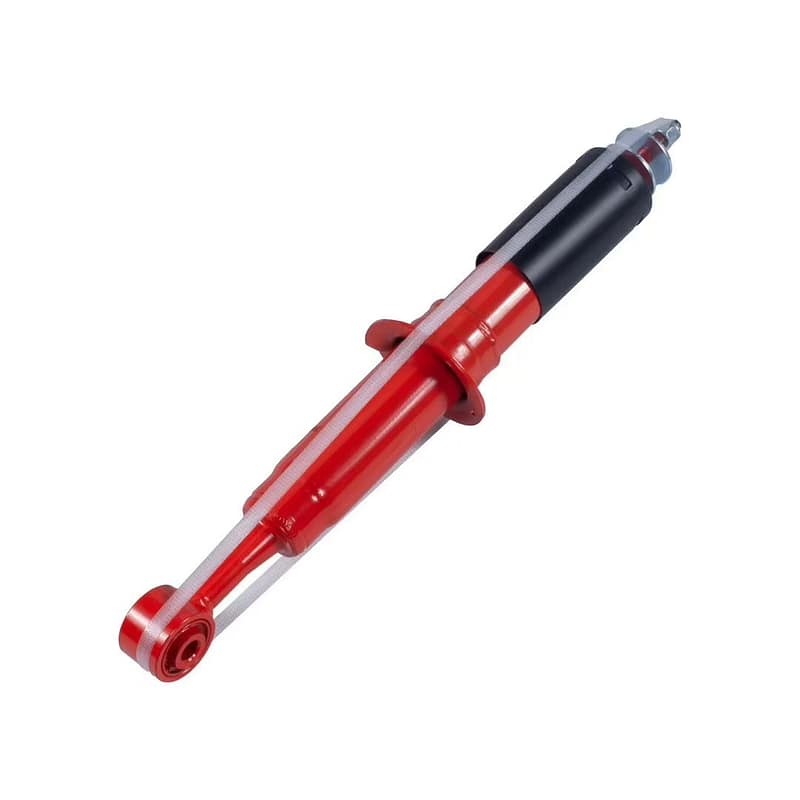
Description: Wondering what do bad shocks sound like? As engineers, we detail the specific sounds of failing shocks: clunking, knocking, squeaking, and humming. Learn to distinguish these noises from other car problems for a safe diagnosis.
Introduction
In the symphony of a well-maintained automobile, there is a specific auditory texture to a healthy vehicle: the quiet hum of the engine, the whisper of tires on asphalt, and the absence of intrusive or alarming noises. When an underlying problem develops, this harmony is disrupted, and the car begins to “speak” to its driver in the language of malfunction. It’s a language of rattles, squeaks, and thuds that can be confusing to the untrained ear. Among the most common yet misunderstood of these automotive noises are those emanating from a failing shock absorber.
The question “what do bad shocks sound like?” is more critical than it seems. Because the shock absorber’s primary role is to control spring movement, its failure doesn’t always manifest as a dramatic change in ride quality immediately. Instead, it often starts subtly, with a noise that could easily be misattributed to a loose exhaust, a worn-out ball joint, or a loose strut mount. From the factory floor, where we diagnose thousands of units and analyze failure reports, we know that these sounds are the first, most reliable warning signs of a suspension system in distress.
Understanding the specific sounds of bad shocks is a critical skill for any car owner. It is the first step in a diagnostic process that could ultimately prevent a dangerous loss of vehicle control. A shock absorber is a safety component, and its failure is not simply a matter of a rough ride—it compromises braking, cornering, and stability. This article will serve as your definitive guide to the sounds of bad shocks. We will break down the most common noises, explain the exact mechanical failure that causes each one, and provide you with the knowledge you need to distinguish a shock-related sound from other potential problems. By learning to “hear” your car, you can perform the first and most important part of diagnosing a critical safety issue.
Core Content
Section 1: The Telltale Noises – Decoding the Language of Failure
The sounds produced by a bad shock absorber are not random; they are the direct result of mechanical instability and wear. Each noise points to a specific type of failure. As we detail these sounds, remember to pay attention to when they occur—over bumps, during turns, when turning the steering wheel, or at certain speeds—as this is crucial for accurate diagnosis.
1. The Clunk or Thud: Impact of Loose Hardware and Mounts
This is one of the most common and easily identifiable sounds associated with a bad shock. It’s a deep, heavy, metallic “clunk” or “thud” that is typically felt more than it is heard.
- The Sound Profile: A single, impactful CLUNK-K noise that occurs when you hit a significant bump or pothole. It’s a noise of solid metal impacting solid metal.
- The Mechanical Cause: This sound almost always indicates a mechanical looseness in the shock absorber’s mounting hardware or its associated suspension components. The shock absorber is not designed to be a structural part of the suspension; it’s a damping unit. It is held in place by fasteners (nuts and bolts) and attached to the chassis via rubber or polyurethane bushings. If these components are loose or worn, the shock can physically move within its mounts.
- Loose Mounting Bolts/Nuts: If the main bolts that hold the shock to the vehicle’s control arm or frame have come loose, the entire body of the shock can shift violently when the suspension travels over an obstacle. This impact between the loose shock and its mount is the source of the clunk.
- Worn Out Mounting Bushings: The rubber or polyurethane bushings that isolate the shock from the chassis are a wear item. Over time, they can crack, tear, and compress, eventually disintegrating. When a bushing fails, it can no longer hold the shock in place, allowing it to shift and clunk against the surrounding metal. This is a very common point of failure, especially on high-mileage vehicles.
2. The Knock or Rattle: The Sound of Internal Failure
If the clunk is a sound of loose external parts, the knock is the sound of something breaking loose inside the shock absorber itself.
- The Sound Profile: A hollow, rattling, or tapping noise that may be continuous over rough surfaces or become more pronounced as you increase speed. It’s less of a single impact and more of a rapid series of sounds.
- The Mechanical Cause: A knocking noise, especially from a non-gas-charged hydraulic shock, often signifies a failure within the damping mechanism itself. Inside a conventional hydraulic shock, there is a piston with valves that moves up and down through oil.
- Worn Valve Components: Over time, the valve components or the piston itself can wear to the point where parts can become loose or “sloppy” within the cylinder. When the shock is compressed and rebounded, these internal components can rattle or knock against the walls of the shock body, producing a distinct rattling sound. This is a sign that the shock has lost its precision and damping control.
- Failed Gas Separator (in Gas-Charged Shocks): In a gas-charged shock, a floating piston separates the oil from the nitrogen gas. If this piston or its seals fail, it can allow the gas to mix directly with the oil. This can lead to aeration and foaming, causing a knocking or gurgling sound as the foamed oil is forced through the valving. This is a sign of significant internal failure and the shock will have no consistent damping ability.
3. The High-Pitched Squeak or Squeal: The Cry of a Dying Bushing
This particular sound is often misdiagnosed as a brake squeal or a problem with the serpentine belt, but its origin is often in the suspension.
- The Sound Profile: An annoying, high-pitched squeak or squeal that changes with suspension movement. It’s most noticeable over small, repetitive bumps (like on a rumble strip or a rough road surface) and can speed up and slow down along with the wheel’s travel.
- The Mechanical Cause: This is the unmistakable sound of a rubber bushing that is under extreme duress. Every car has several suspension bushings that pivot and flex. The shock absorber itself is attached to the vehicle via its top and bottom mounting bushings.
- Dry-Rot or Lack of Lubrication: Rubber bushings are designed to be flexible, but they need a certain amount of lubrication to work quietly. If the rubber becomes old, cracked, or “dry-rotted,” it loses its suppleness. As the suspension moves, the dry rubber binds and then releases, creating friction and heat, which in turn produces the squealing noise. This is especially common in extreme climates or on vehicles that see very little use, where the rubber can become stiff and brittle.
4. The Hum or Roar: The Precursor to Cupping
This is a different kind of sound altogether. It’s not a transient noise that happens over a bump; it’s a constant, speed-related hum that gets louder as you drive faster.
- The Sound Profile: A low-pitched hum or roar that emanates from the wheels and becomes noticeable at speeds above 40-50 mph. It does not change in pitch when going over bumps, only with vehicle speed. You will often feel a corresponding vibration in the steering wheel or the floor of the car.
- The Mechanical Cause: A constant humming/roaring sound from the tires is almost always a sign of irregular and severe tire wear, a condition known as cupping or scalloping. As we’ve stated, a primary function of a shock absorber is to keep the tire firmly planted on the road. When a shock is worn out, the wheel assembly bounces up and down violently after hitting a bump. Each time the wheel comes back down, it impacts the pavement, tearing small chunks of rubber out of the tire tread in a distinct, wavy, cup-like pattern.
- The Amplifying Effect: This cupping pattern makes the tire vibrate as it rotates, creating the low-frequency hum. The bad shock caused the cupping, and the cupping caused the hum. While the sound technically comes from the tire, its root cause is the shock absorber. This is a secondary, but very common, sign of shock failure that is hard to miss once it starts.
Section 2: Distinguishing Shock Noises from Other Common Problems
A good diagnosis involves ruling out other culprits. The sounds of bad shocks have specific characteristics that help differentiate them from other common car noises.
| Sound | Bad Shock Clunk/Knock | Bad Ball Joint Clunk | Bad Strut Mount Clunk |
|---|---|---|---|
| When it Happens | Primarily over bumps and dips. May also happen during hard turns. | Primarily over bumps and dips, especially when the weight of the vehicle shifts. | When turning the steering wheel, especially while stationary or moving slowly. Over bumps. |
| Key Differentiator | Noise is specifically linked to one corner of the car. May feel like something is loose. | Often accompanied by vague or wandering steering. Noise is a solid, heavy thud. | A clunk when turning is a classic symptom. Steering may feel “notchy” or have a dead spot. |
| Vibration | Little to no vibration unless it’s the hum of a cupped tire. | Usually no vibration associated. | A clunk from a strut mount is usually a solid sound, not a vibration. |
| Fix | Replace shock absorber and/or its mounting hardware/bushings. | Replace the ball joint assembly. | Replace the strut mount (often a complete unit on MacPherson struts). |
As a factory, we emphasize that while the noise can point you in the right direction, a definitive diagnosis requires a physical inspection. If you hear a clunk, the next step is to have a mechanic check for loose nuts, torn bushings, and excess play in the shock assembly.