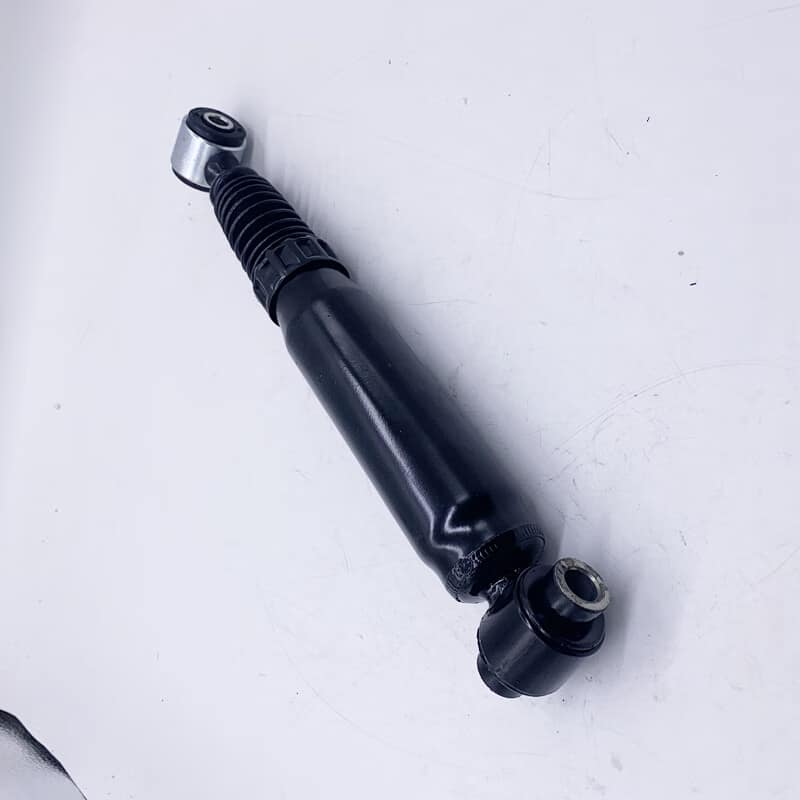
Meta Description: What do shocks do on a car? As a manufacturer, we provide the definitive answer. They control spring motion to ensure tire contact, guaranteeing safety, stability, and control. Learn the true function here.
Introduction
Every interaction a driver has with their vehicle—whether accelerating, braking, or cornering—relies on a fundamental principle: maintaining contact between the tires and the road. This seemingly simple requirement is managed by a sophisticated system, and at the heart of this system lies a component that is often misunderstood. When we ask the question, “What do shocks do on a car?” the most common answer, “They make the ride smooth,” is a surface-level observation that misses a critical, life-saving truth.
From the vantage point of our factory floor, where components are forged, dyno-tested, and validated under rigorous conditions, we must provide a clearer, more accurate definition. What do shocks do on a car? They are not comfort devices. They are velocity-sensitive damping devices whose primary function is to control the uncontrolled motion of the suspension springs. By doing so, they are the single most critical component in ensuring the tires maintain constant contact with the pavement. This ability to regulate suspension oscillations is the bedrock of vehicle safety and handling. This article will provide a comprehensive, manufacturer-level explanation of what do shocks do on a car, breaking down their functions, their importance, and their role as an unsung hero of automotive safety and performance.
Core Content
Section 1: The Fundamental Misconception: Shocks Don’t Absorb Shocks
To truly understand what do shocks do on a car, we must first dismantle a widespread misconception. The name “shock absorber” is a historical misnomer. A shock absorber does not absorb the jolt from a bump. That is the exclusive job of the suspension spring. The spring is the first to react to an impact; it compresses to store the kinetic energy of the bump and cushions the chassis from the initial blow.
The real danger lies in what happens next. If a car were equipped with springs alone, every time a wheel hit a bump, the spring would rebound, lifting the wheel off the road, causing the vehicle to bounce uncontrollably until all its energy was dissipated. This chaotic oscillation would make driving not just uncomfortable, but exceedingly dangerous and impossible to control. This is where the shock absorber’s function becomes essential. What do shocks do on a car in this scenario? They apply a controlled, velocity-sensitive resistance to the spring’s rebound. They act as a powerful “brake” for the suspension force, preventing the spring from oscillating and returning it to its neutral position smoothly and efficiently.
Therefore, the core of what do shocks do on a car is to manage motion, not absorb impact. They are the damping mechanism that transforms the energy of a bump into a controlled, stable movement, making the vehicle drivable and safe.
Section 2: The Safety Imperative: Ensuring Tire-to-Road Contact
The ultimate purpose of controlling spring motion is safety. This is the most critical aspect of understanding what do shocks do on a car. The four small patches where the tires meet the pavement are the vehicle’s only connection to the road. Every action—accelerating, braking, steering—depends entirely on the friction generated at these four contact patches. A shock absorber’s most vital job is to ensure that connection is never broken.
- What do shocks do on a car during emergency braking? When a driver slams on the brakes, the vehicle’s weight shifts violently forward (weight transfer). This compresses the front suspension and unloads the rear. A healthy shock absorber at the front controls this weight transfer, preventing dangerous “nose-dive.” This keeps the front tires firmly on the ground to apply maximum stopping power and maintains stability. Worn front shocks allow the front to lunge forward, potentially causing the front tires to lock or lose traction, and they unload the rear, risking loss of control.
- What do shocks do on a car during cornering? When navigating a corner, centrifugal force causes the car to “roll” and weight shifts to the outside wheels. A properly functioning shock absorber resists this roll. This controlled body roll is essential for maintaining grip. If shocks are weak, excessive roll can cause the inside tires to lift, drastically reducing the vehicle’s ability to corner and increasing the risk of a rollover.
- What do shocks do on a car on uneven surfaces? A shock absorber controls the rapid up-and-down movement of the wheels over rough terrain. This constant motion control ensures that each tire maintains its grip on the road, allowing the driver to maintain steering and control. Without a shock absorber, the wheels would skip and dance over the surface, leading to a sudden and total loss of traction.
In summary, the answer to what do shocks do on a car in terms of safety is simple but profound: they maintain tire contact. Any situation where a tire loses contact with the road is a life-threatening event, and the shock absorber is the primary component engineered to prevent it.
Section 3: Enhancing Vehicle Dynamics: Control, Stability, and Ride Quality
Beyond the critical safety imperative, the functions of shocks extend to improving the overall driving experience and vehicle performance.
- Improving Control and Stability: A car with properly functioning shocks feels solid, planted, and responsive. It responds precisely to steering inputs, accelerates without excessive squat, and brakes without wallowing. This feeling of oneness between the driver and the car is a direct result of controlled suspension motion. A well-damped car is a predictable car.
- Refining Ride Quality: While what do shocks do on a car in terms of comfort is not their primary function, they do contribute significantly to a refined ride. By controlling high-frequency vibrations and uncontrolled bouncing, they filter out the harshness that would otherwise be transmitted to the cabin. They ensure a single, controlled movement rather than a series of jarring ones.
- Protecting Other Components: Every uncontrolled suspension movement puts stress on other components, including control arm bushings, ball joints, and wheel bearings. By dampening these motions, shocks prevent premature wear and tear, extending the life of the entire vehicle and maintaining its structural integrity.
Section 4: The Technology of Damping: Mono-Tube, Twin-Tube, and Adaptive Systems
The principle of what do shocks do on a car remains constant, but the technology has evolved to meet diverse performance demands.
- Twin-Tube Shocks: The most common design in standard passenger vehicles, featuring an inner tube for the piston and an outer tube as a fluid reservoir. They are cost-effective and provide a good balance of comfort and performance.
- Monotube Shocks: Favored in performance and heavy-duty applications. This single-tube design, pressurized with nitrogen gas, offers superior heat dissipation and consistent performance under extreme conditions, making it ideal for high-performance driving.
- Adaptive/Semi-Active Shocks: The pinnacle of shock technology. These systems, like Magnetic Ride Control, use a fluid that can change its viscosity in milliseconds in response to an electrical current. The car’s computer actively adjusts the shock firmness based on driving conditions, enabling a car to be comfortable on the highway and sporty on a winding road in real-time. This dynamic control is the ultimate expression of what shocks do on a car—actively adapting their performance.
Section 5: Recognizing the Signs of Failing Shocks
Knowing what do shocks do on a car is only half the battle. A driver must recognize the signs of failure, as the degradation is often gradual.
Key indicators of worn shocks include:
- The car bounces multiple times after a bump.
- Excessive front-end dive on braking.
- Noticeable body lean in corners.
- A general feeling of instability at high speeds.
- Uneven tire wear patterns.
- Leaking fluid on the shock body.
These signs indicate a loss of motion control. Shocks are a safety-critical component, and their prompt inspection and replacement are essential for safe driving.
Conclusion
In conclusion, a definitive answer to what do shocks do on a car reveals a far more sophisticated and critical component than popular belief suggests. From our perspective as manufacturers, a shock absorber’s primary function is to control the motion of the suspension springs. This control is the key to ensuring that the tires maintain constant contact with the road—an absolute non-negotiable for vehicle safety. This fundamental function translates directly into effective braking, stable cornering, and predictable handling. While they contribute to ride comfort, the core purpose of a shock absorber is that of a guardian. It is a silent, intelligent system working tirelessly to keep the vehicle stable, safe, and fully connected to the road, and understanding this role is the first step toward appreciating the engineering excellence of a modern automobile.