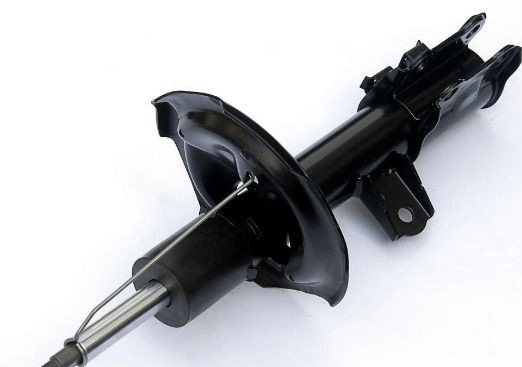
Meta Description: What does a shock absorber do on a car? As a manufacturer, we provide a definitive, expert answer. It controls suspension motion, manages kinetic energy, and ensures tire contact—the cornerstone of braking stability, cornering control, and overall safety. Learn the critical role of a shock absorber on a car.
Introduction
In the vast lexicon of automotive components, few are as frequently misunderstood as the shock absorber. A common misconception among car owners is that a shock absorber is designed to absorb bumps and ensure a smooth ride. While a comfortable ride is a beneficial byproduct, it is not its primary function. So, from the vantage point of our factory floor where these components are engineered, forged, and rigorously tested, let us provide a definitive and professional answer to the fundamental question: What does a shock absorber do on a car? A shock absorber is a sophisticated, velocity-sensitive hydraulic damper. Its true purpose is to manage the kinetic energy generated by the suspension springs, controlling their rebound and compression to maintain tire-to-road contact. Understanding this is fundamental to appreciating what does a shock absorber do on a car as a critical safety system, not merely a comfort device. This article will deconstruct the function of a shock absorber on a car, moving beyond common myths to explain the vital engineering and safety science behind its operation.
Core Content
Section 1: Dispelling the Misconception: What a Shock Absorber on a Car Actually Does
Before we can fully explain what does a shock absorber do on a car, we must first address the most pervasive myth surrounding it. The name “shock absorber” is the primary source of confusion. It implies that its job is to cushion the vehicle from road imperfections. This is incorrect.
The component responsible for handling the initial impact of a bump or pothole is the spring (whether it’s a coil, leaf, or torsion spring). The spring’s function is to flex and compress, absorbing the energy of the impact. However, a spring without a control device is dangerously unpredictable. After compressing, it will rebound, potentially lifting the wheel off the ground, and then oscillate up and down several times before settling. This chaotic motion would render the vehicle uncontrollable.
This is where the shock absorber’s essential function comes into play. So, what does a shock absorber do on a car in this scenario? It does not soften the initial hit. Instead, it dampens the rebound. It manages the speed of the suspension’s movement, ensuring a single, controlled cycle of motion rather than multiple, uncontrolled oscillations. Think of it as the difference between dropping a ball onto concrete versus into a vat of thick oil. The spring is the ball, and the shock absorber is the oil, controlling how quickly and smoothly the “spring” can return to its original position. Therefore, the core answer to what does a shock absorber do on a car is to act as a motion-control device that manages the energy of the spring, ensuring stability and safety.
Section 2: The Critical Safety Function: Ensuring Constant Tire Contact
This leads us to the most critical aspect of what does a shock absorber do on a car. The ultimate purpose of controlling spring motion is to ensure that your vehicle’s tires maintain constant and uninterrupted contact with the pavement. The four small patches where your tires meet the road are the only points of contact between your vehicle and the physical world. Every action you take—from braking and accelerating to steering and cornering—depends entirely on the friction generated at these four contact patches.
A shock absorber’s primary job is to protect this connection. When we ask, “what does a shock absorber do on a car?” the most important answer is: it ensures tire contact.
- What does a shock absorber do on a car during hard braking? When you apply the brakes, weight transfers violently to the front of the vehicle, causing the nose to “dive.” A healthy shock absorber resists this excessive dive, helping to keep the front suspension in its optimal position. What does a shock absorber do on a car for braking safety? It keeps the front wheels firmly planted on the ground, allowing them to apply their maximum braking potential. A worn shock absorber, unable to control this motion, can cause the front end to bottom out, lifting the inside wheels and drastically increasing stopping distance and the risk of losing control.
- What does a shock absorber do on a car during cornering? As you navigate a turn, centrifugal force pushes the vehicle’s weight to the outside, causing the body to “roll.” A functioning shock absorber resists this roll, helping to maintain a stable, flat cornering attitude. What does a shock absorber do on a car for cornering safety? It prevents excessive body roll, which ensures that all four tires contribute to lateral grip, reducing the risk of understeer or oversteer and potential rollovers.
- What does a shock absorber do on a car on bumpy roads? On an uneven surface, each wheel moves up and down independently. What does a shock absorber do on a car in this situation? It damps the rapid oscillation of the wheels, preventing them from bouncing off the road surface. This constant contact is what allows you to maintain steering and throttle control over rough and unpredictable terrain.
In summary, understanding what does a shock absorber do on a car requires recognizing its role as a guardian of grip and traction.
Section 3: The Engineering Inside How a Shock Absorber on a Car Works
To truly appreciate what a shock absorber does on a car, one must look under the hood. It is, in essence, a precision hydraulic pump. The main components are a cylinder filled with hydraulic fluid and a piston rod connected to a piston that travels within the cylinder.
As the wheel hits a bump and moves upward, it forces the suspension to compress, pushing the piston rod and piston into the cylinder. This action displaces the fluid, forcing it to flow through small, carefully calibrated internal valves in the piston and the base of the shock. As the fluid is forced through these narrow passages, it creates resistance. The process is reversed when the wheel moves downward and the piston extends.
The genius of the system lies in its velocity sensitivity. The faster the piston moves (i.e., the faster the wheel is moving up or down), the greater the pressure created, and the higher the resistance. This adaptive resistance is precisely tuned by our engineers to provide optimal control for every type of road input. It provides just enough resistance to manage the motion without being overly harsh, perfectly defining the sophisticated nature of what a shock absorber does on a car.
Section 4: Different Designs and Their Impact on What a Shock Absorber Does on a Car
The basic principle of what a shock absorber does on a car has remained constant, but the technology has evolved to meet specific performance demands. Different designs alter the shock’s behavior, impacting its answer to the question, “What does a shock absorber do on a car?”
- Twin-Tube Shocks: This is the most common design for standard passenger cars. It features an inner tube where the piston operates and an outer tube that acts as a fluid reservoir. They are reliable, cost-effective, and provide a good balance of comfort and performance. What does a shock absorber of this type do best on a car? It offers a smooth, compliant ride with predictable damping for everyday driving.
- Monotube Shocks: This high-performance design consists of a single, large, pressurized tube, often filled with nitrogen gas in a chamber separated from the oil by a floating piston. This superior design offers better heat dissipation and is immune to performance-robbing “aeration” (when air mixes with the fluid). What does a shock absorber of this type do differently on a car? It provides consistent, fade-free performance under demanding conditions like heavy towing, aggressive driving, or high-speed highway use. This is the design of choice for performance cars and trucks.
- Adaptive/Semi-Active Shocks: This is the pinnacle of shock absorber technology, providing a dynamic answer to what a shock absorber does on a car. Systems like Magnetic Ride Control use shocks filled with a fluid containing tiny metallic particles. By applying an electric current, the viscosity of the fluid can be changed in milliseconds. The vehicle’s computer analyzes road conditions and driving inputs in real-time and actively adjusts the firmness of the shocks accordingly. What does a shock absorber of this type do on a car? It allows a car to be plush and comfortable on the highway yet firm and sporty on a winding road, providing the best of all worlds.
Section 5: Warning Signs: How to Tell If Your Car’s Shock Absorbers Are Failing
Understanding what a shock absorber does on a car is only useful if you can recognize when it’s failing to perform its duty. The degradation is often gradual, making it easy for drivers to become accustomed to poorer handling. Key signs that your shock absorbers may need replacement include:
- The car continues to bounce more than once or twice after hitting a bump or dip in the road.
- Excessive “nose-dive” when braking.
- Noticeable body roll or sway during cornering.
- A general bouncy or unstable feel at highway speeds.
- Uneven tire wear patterns, such as cupping or scalloping.
- Leaking fluid on the shock body.
- Longer stopping distances in wet or slippery conditions.
When these signs appear, the shock absorber can no longer perform its function, and its replacement is a critical safety issue. It’s no longer a question of comfort; it’s a matter of control.
Conclusion
In closing, we return to the central question: What does a shock absorber do on a car? From a manufacturer’s perspective, the answer is unequivocal and rooted in engineering safety. A shock absorber on a car is not a comfort device; it is a sophisticated, velocity-sensitive hydraulic control system. Its primary function is to manage the kinetic energy of the suspension springs, ensuring controlled motion and, most importantly, maintaining constant tire contact with the road. This single capability is the bedrock of vehicle safety, enabling stable braking, predictable cornering, and overall stability under all driving conditions. Therefore, what does a shock absorber do on a car? It is an unsung hero, a critical safety component that works silently every second you are behind the wheel to keep you firmly connected to the road and in complete control.