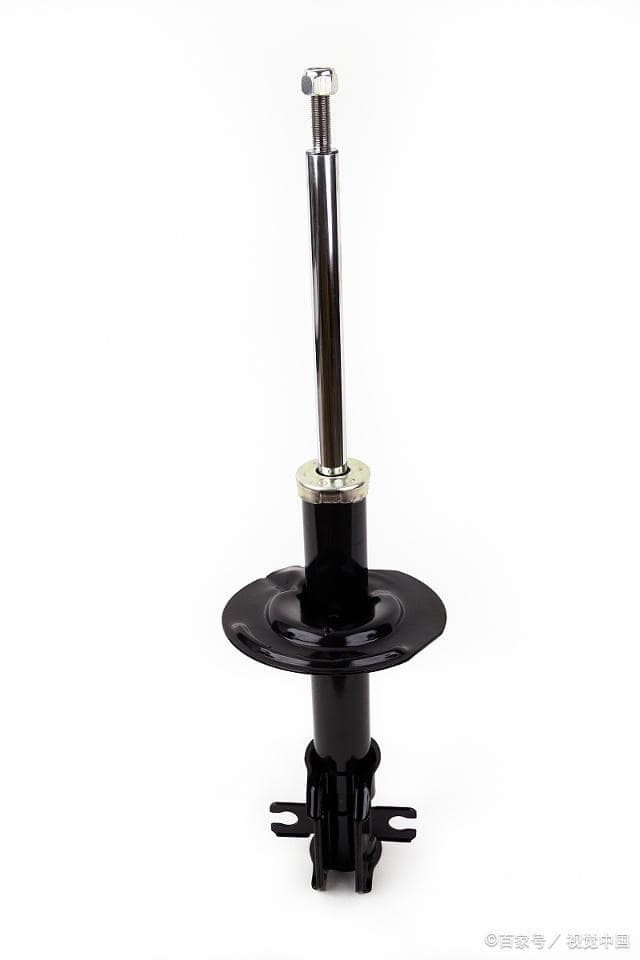
Meta Description: What is shock absorber in a car? Discover the answer from the factory floor. This comprehensive guide explains the function, types, and critical importance of a shock absorber for safety, performance, and tire longevity. Learn why it’s not just about comfort. #shockabsorber #suspension #autorepair #carparts #safety
Introduction
As a manufacturer of automotive components, we are in the business of precision engineering. Every day, on our factory floor, we meticulously craft components that will endure millions of cycles of stress, vibration, and pressure. Yet, one of the most fundamental and frequently asked questions we receive from consumers and industry partners alike is deceptively simple: what is shock absorber in a car?
This question, while seemingly basic, is a gateway to understanding one of the most critical, yet often misunderstood, systems in any vehicle. Many motorists erroneously believe that the primary role of a shock absorber is to cushion passengers from a bumpy ride—to provide “comfort.” While it does contribute to a smooth ride, this is a consequence of its true purpose, not its function. The failure to understand what is shock absorber in a car fundamentally leads to neglect of a vital safety component.
As the engineers and technicians who build these parts, we have a unique responsibility. We must bridge the gap between the component’s physical reality and its essential function in the dynamic environment of a moving vehicle. This guide will serve as your definitive resource, articulated from our vantage point. We will delve beyond the surface-level definition to explore the intricate hydraulic and mechanical principles that govern a shock absorber’s operation, differentiate it from other suspension components, and most importantly, explain why its health is non-negotiable for your safety and the longevity of your vehicle. Let’s begin by properly defining what is shock absorber in a car from first principles.
Core Content
Section 1: Answering the Core Question: What is Shock Absorber in a Car? The Official Definition
To begin, let’s provide a clear, technical definition. What is shock absorber in a car? A shock absorber, also known as a damper, is a mechanical or hydraulic device designed to control or dampen the undesirable, oscillatory spring movements in a vehicle’s suspension system.
This definition highlights two crucial elements. First, its target is not the road, but the spring. Second, its function is not to absorb bumps, but to dampen oscillation. Let’s break this down to fully grasp what is shock absorber in a car.
1. The Misconception: Shock Absorbers vs. Springs The most common misconception about what is shock absorber in a car is confusing it with the suspension springs (coil or leaf springs). The springs are components that store energy. Their job is to support the vehicle’s weight and absorb the initial impact from a road imperfection. However, if you compress a spring, it wants to rebound, often with more force than you applied. If you lift a vehicle and drop it, the springs will cause it to bounce up and down several times.
This uncontrolled bouncing is dangerous and uncomfortable. This is precisely where the shock absorber comes in. The shock absorber is essentially an “energy management” device. It does not support the weight of the car; the springs do. Instead, it works in conjunction with the springs. As the spring compresses or rebounds, the shock absorber resists this motion, converting the kinetic energy into heat through fluid displacement, which is then dissipated into the atmosphere. This controlled resistance prevents the spring from oscillating, ensuring the tire maintains consistent contact with the road.
2. Clarifying the Name: What is Shock Absorber in a Car’s Nomenclature? The term “shock absorber” is a historical artifact. It implies a role of absorbing “shocks” from the road. While this is a side effect of its operation, a more accurate term is “damper.” A damper dampens motion, much like a sound damper muffles sound. We, as manufacturers, use the terms interchangeably, but understanding that its primary function is to dampen spring oscillation is key to truly understanding what is shock absorber in a car.
Section 2: The Inner Workings: How a Shock Absorber Functions (From a Factory Perspective)
Now that we know what it is, let’s explore how it works. As the people who assemble these components, we can attest that the inner workings of a modern gas-charged shock absorber are a marvel of fluid dynamics and precision engineering. Understanding this process is fundamental to understanding what is shock absorber in a car on a deeper level.
1. The Basic Principle: Fluid Displacement At its core, every shock absorber operates on a simple principle: forcing a fluid through a small orifice. This is called a hydraulic system. The shock absorber consists of a main cylinder (pressure tube) filled with oil and a smaller piston attached to a rod that passes through the cylinder. As the suspension moves (e.g., when you hit a bump), the rod is forced into the cylinder, pushing the piston into the oil. The oil has nowhere to go but through a series of precisely calibrated valving holes in the piston.
The size and shape of these holes are carefully engineered by our design team. The oil is forced through them at high pressure, creating resistance. This resistance is what dampens the suspension movement. The energy from the road impact isn’t stored or “absorbed” by the part; it is converted into heat by the shearing action of the fluid being forced through the tiny valving passages.
2. The Critical Component: Valving The valving system is the “brain” of the shock absorber. It allows the shock to behave differently under different types of input.
- Rebound Valving: Controls the movement as the suspension extends (returns to its normal position after a bump).
- Compression Valving: Controls the movement as the suspension compresses (when hitting a bump). Our R&D departments spend countless hours optimizing the size and number of these valving circuits. For an SUV, you might want firmer valving to handle heavy loads and rough terrain. For a luxury sedan, the valving is tuned for maximum comfort and isolation from road harshness. This tuning is a key part of defining what is shock absorber in a car for a specific application.
3. The Advancement: Gas-Charging (Monotube vs. Twin-Tube) Modern shock absorbers are not just simple hydraulic systems. Most are gas-charged, which significantly improves performance.
- Twin-Tube Design: This is a common design. It has two cylinders nested inside each other. The inner tube holds the hydraulic oil and the piston rod assembly. The outer tube serves as a reservoir for oil and nitrogen gas. Gas pressurization (usually 100-200 psi) prevents oil foaming. Foamy oil (aerated) loses its ability to dampen effectively, a problem known as “shock fade.”
- Monotube Design: This is a more advanced, high-performance design favored by OEMs and performance tuners. It consists of a single, large tube with a floating piston separating the hydraulic oil from a high-pressure charge of nitrogen gas (300-500+ psi). This design offers better heat dissipation, more consistent valving, and resistance to foaming, even under extreme conditions.
Section 3: Distinguishing the Shock Absorber: Its Role in the Suspension System
To fully define what is shock absorber in a car, we must place it within the context of the entire suspension system and distinguish it from other similar-sounding components.
| Component | Primary Function | Relationship to Shock Absorber | Understanding “What is Shock Absorber in a Car?” |
|---|---|---|---|
| Shock Absorber | Controls spring oscillation. | The energy manager. | This is the component we are defining. It works with the spring. |
| Strut | A structural assembly that integrates a shock absorber and spring, and provides suspension geometry. | A strut contains a shock absorber but is much more. It is also a structural part of the chassis. | This is why a shock absorber and a strut are not the same thing. A strut is a complex assembly. |
| Springs | Supports the vehicle’s weight and absorbs initial impacts. | The component whose motion the shock absorber controls. | The shock and spring work as a team; one stores energy, the other manages it. |
| Control Arms / Links | Connects the wheel assembly to the chassis and controls wheel movement. | Provides the structural framework for the shock and spring to operate within. | A control arm holds the shock absorber, which is damping the motion of the spring on a wheel attached to the control arm. |
A Key Takeaway on “What is Shock Absorber in a Car?” If you were to remove the springs from a car, it would sit on the ground. If you were to remove the shock absorbers, the car would still be able to roll, albeit in a very bouncy and dangerous way. If you were to remove the control arms, the wheels would flop around. Each part has a distinct, non-redundant job. The shock absorber’s singular and vital job is to control the spring.
Section 4: The Impact: Why Knowing “What is Shock Absorber in a Car” is a Matter of Safety
Perhaps the most important reason to understand what is shock absorber in a car is to realize its profound impact on safety. A worn-out shock absorber is not just an inconvenience; it is a significant hazard that undermines nearly every aspect of your vehicle’s ability to handle and react safely.
1. Compromised Tire Contact and Road Holding This is the single most critical safety function of a shock absorber. The tires are the only point of contact between the car and the road. A shock absorber ensures that the tire maintains consistent downward force on the pavement. When shocks are worn:
- On Bumpy Roads: The tires can bounce completely off the ground, resulting in a total loss of traction for that split second. This is a leading cause of “hydroplaning” on uneven surfaces or during a sudden downpour.
- During Braking: Weight transfers to the front wheels, causing the front end to “dive.” Worn shocks exaggerate this, lifting the rear wheels and potentially causing the rear end to sway. This dramatically increases stopping distance and can lead to a loss of steering control.
- During Cornering: The vehicle body “rolls” to the outside of the turn. Worn shocks allow excessive body roll, which lifts the inside wheels, reducing grip and making the car prone to rollovers or spinning out.
- In Crosswinds: A vehicle with worn shocks is much “floatier” and less stable, easily being pushed around by gusts of wind.
2. Increased Braking Distance Studies have shown that vehicles with worn shock absorbers can take up to double the distance to stop on wet or uneven surfaces compared to vehicles with properly functioning shocks. This is a terrifying statistic that proves that the question, “what is shock absorber in a car?” should be a top-of-mind safety issue for every driver.
3. Poor Vehicle Control and Instability Beyond tire contact, worn shocks make a vehicle feel vague, unpredictable, and disconnected from the driver’s inputs. The car may “wander” on the highway, react slowly to steering corrections, and feel generally unstable. This erodes driver confidence and creates a dangerous situation, especially when evasive maneuvers are required.
4. Accelerated Wear on Other Components A shock absorber that has lost its damping ability transfers its uncontrolled energy to other parts of the vehicle. This creates a “chain reaction” of wear and tear, leading to more expensive repairs:
- Premature Tire Wear: Cupping or scalloping on the tire tread is a classic sign of worn shocks.
- Worn Suspension Components: Extra stress is placed on ball joints, tie rods, control arm bushings, and the springs themselves, leading to their premature failure.
Conclusion: What is Shock Absorber in a Car? It’s Your Safety Net
From our perspective on the factory floor, where every millimeter of valving and every grade of steel is debated, the answer to the question, “what is shock absorber in a car?” is not just a technical definition. It is a statement about responsibility. It is a hydraulic device that manages the energy of a vehicle’s springs to maintain tire contact. But more profoundly, it is your vehicle’s primary connection to the road, a silent guardian of stability and control. It is not a luxury part for comfort but a critical safety component that is foundational to predictable handling and effective braking. Understanding that a shock absorber’s job is to control the spring, and in doing so, control the car, is the first step toward being a safe, responsible, and informed vehicle owner.