Meta Description: Experiencing a bumpy ride? Wondering why does my car ride feel so bumpy? Our in-depth guide, from the factory floor, details the top causes, from worn shocks to bad tires and alignment issues. Learn how to diagnose and fix for a smoother drive.
Introduction
As a manufacturer of automotive suspension components, we’ve dedicated our operations to the science of motion, control, and comfort. On our factory floor, we test and perfect components to ensure that the vehicles they go into deliver the precise balance of handling, stability, and smoothness their drivers expect. Yet, one of the most common and frustrating issues we hear about—both from partners and consumers—is a question that points to a fundamental failure of this engineering: “Why does my car ride feel so bumpy?”
A car’s ride is its signature. It should be a comfortable, controlled glide over the road, absorbing imperfections without complaint. When that signature changes, and every bump in the road translates into a jarring, uncomfortable shudder through the chassis, it’s more than just an annoyance. It’s a warning sign. Your vehicle is telling you that a critical component is either worn, damaged, or failing. A bumpy ride erodes comfort, increases driver fatigue, and, most importantly, compromises the vehicle’s safety, braking, and handling stability.
The causes of a rough ride are not always obvious. A driver might immediately suspect a problem with the tires, while the root cause could be deep within the suspension system. As the factory engineers who design these systems, we are uniquely positioned to provide a clear, authoritative roadmap for diagnosing this problem. This guide is our definitive resource, built from decades of experience on the production line and in the test lab. We will systematically break down the most common culprits behind a bumpy ride, explain the specific signs to look for, and provide you with the knowledge you need to restore your vehicle to its designed, smooth-operating condition.
Core Content
Section 1: The Foundation of a Smooth Ride – Understanding Your Suspension’s Role
Before we can diagnose the cause of a bumpy ride, we must first understand how a smooth ride is achieved in the first place. Your vehicle’s suspension is a complex, interconnected system designed to work as a single unit. Each part has a specific job, and when all parts are functioning correctly, they create a harmony that results in a comfortable and stable experience.
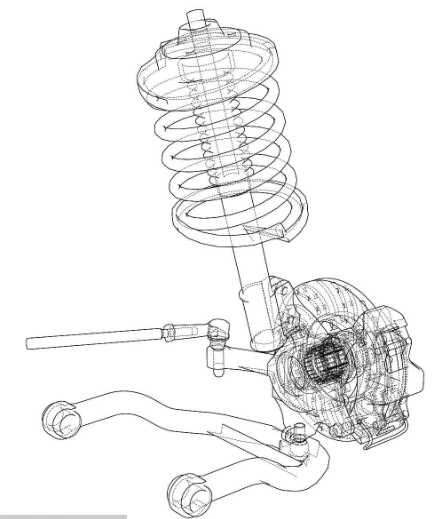
The primary goal of the suspension is to keep the vehicle’s tires in constant and optimal contact with the road surface. This is crucial for safety (braking and acceleration), handling (cornering), and comfort (isolating the cabin from road vibrations). Three core components are responsible for this:
- The Springs: These are the workhorses. Coils or leaf springs are responsible for supporting the vehicle’s weight and absorbing the large initial impact of bumps. They store energy and release it to bring the wheel back down to the road. Think of them as the primary shock absorbers.
- The Shock Absorbers (Dampers): This is where most of the confusion lies. Shocks do not absorb shock—that’s the spring’s job. A shock absorber’s sole purpose is to control the oscillation of the spring. Without shocks, the springs would continue to bounce up and down long after a bump, making the car feel like a pogo stick. The shock forces this motion to dampen out, allowing the tire to stay planted on the ground.
- The Linkage Components (Control Arms, Bushings, Ball Joints): These are the arms and joints that connect the wheel assembly to the car’s frame. They guide the motion of the wheel and, critically, maintain the suspension geometry—angles like caster and toe that are vital for straight-line stability and tire wear. Worn linkage components introduce slop and alter these angles, leading directly to a bouncy and imprecise ride.
Section 2: Diagnosing the Top Culprits Behind a Bumpy Ride
Now, let’s address the core question. A bumpy ride has a variety of sources, and we will examine them in order of likelihood, starting from the most common to the less frequent.
1. Worn or Faulty Shock Absorbers or Struts This is, without a doubt, the number one cause of a bumpy or floaty ride. When shock absorbers age, the internal hydraulic fluid degrades, and the valves wear out. This causes them to lose their ability to control the spring’s movement effectively.
- Why it Causes a Bumpy Ride: The vehicle’s weight transfers excessively over bumps. You will feel the front end “dive” when braking, the rear “squats” when accelerating, and the body will roll heavily in corners. The most definitive test is the “bounce test”: Press down firmly on a corner of your car. If it bounces more than once and a half times before settling, your shocks are worn out and need replacement.
- Key Symptom: The “gliding over small bumps” feeling is gone. Instead, you feel every single imperfection, and the car feels uncontrolled and nervous.
2. Damaged or Unbalanced Tires Your tires are the only part of your car that touches the road, so they are a primary factor in ride quality. A number of issues can make them a source of bumpiness.
- Unbalanced Tires: This is a very common culprit. A small imbalance in the tire’s weight distribution causes it to wobble as it spins at high speed. This wobble is transmitted up through the suspension, creating a rhythmic vibration or “shimmy” that is most noticeable between 55-65 mph.
- Damaged Tires: A tire with a broken or shifted belt internally will have a pronounced bump or bulge. You’ll often feel a single, strong thump or wobble that repeats in sync with the tire’s rotation. Visually inspect your tires for any such deformities. Driving into a pothole can easily cause this kind of internal damage.
- Worn Tires: Tires with worn-out tread have a diminished ability to absorb small road vibrations. Their performance characteristics change, often leading to a noisier and rougher ride. Uneven wear (cupping or scalloping) is often directly caused by faulty shock absorbers, creating a vicious cycle of roughness.
- Incorrect Tire Pressure: Both under- and over-inflation can negatively affect ride quality. Under-inflated tires have a squishy, unpredictable feel and can cause “bouncy” cornering. Over-inflated tires are very rigid and transmit harsh impacts directly into the cabin. Check your pressure monthly and always use the manufacturer’s recommended PSI, found on the driver’s door jamb sticker.
3. Worn Suspension Bushings and Joints Suspension bushings are the rubber or polyurethane cushions that fit between metal components. They act as a buffer to absorb vibration and noise, and they ensure components move smoothly.
- Why it Causes a Bumpy Ride: Over time, due to age, heat, and stress, these rubber parts dry out, crack, and compress. Once they are compromised, they allow for metal-to-metal contact and introduce “play” or “slop” into the suspension. This play gets taken up as the suspension moves over bumps, resulting in clunking noises, vague steering, and a general feeling of looseness and roughness.
- Key Component: Control arm bushings and sway bar links are frequent failure points.
4. Wheel Alignment Issues Your car’s alignment is the angle at which your wheels are set relative to the vehicle and the road. Incorrect alignment doesn’t just cause a crooked steering wheel; it can also ruin your ride.
- Why it Causes a Bumpy Ride: When the alignment is off (typically toe misalignment), the tires are essentially dragging sideways slightly. As they roll, they scrub against the pavement, causing a feeling of instability, wandering, and a rough, inconsistent ride, especially on highways. It also leads to rapid and uneven tire wear.
5. Worn or Damaged Suspension Components While less common than the issues above, worn-out components can also be a direct cause of a bumpy ride.
- Worn Strut Mounts: The strut mount sits at the top of the strut assembly and acts as a pivot point for the steering. Worn mounts can cause a clunking noise when turning or going over bumps and can lead to a vague, disconnected steering feel that can be perceived as roughness.
- Broken or Weak Springs: A broken or sagging spring can’t support the vehicle’s weight properly. This throws off the alignment of the entire suspension, leading to a “bottoming out” sensation over bumps and an overall unstable, poorly damped ride.
Section 3: A Practical, Factory-Recommended Diagnostic Path
If your car has a bumpy ride, don’t just throw parts at it. Instead, follow this logical path to diagnose the issue yourself or to speak knowledgeably with your mechanic.
Step 1: The Visual Walk-Around First, perform a thorough inspection.
- Tires: Check for visible damage, bulges, and signs of uneven or cupping wear. Check the tire pressure with a gauge.
- Suspension: Kneel down and look at your suspension. Look for shiny, wet spots that would indicate a leaking shock. Look at the control arms and see if the rubber bushings are cracked, torn, or collapsed.
Step 2: The In-Cabin Test Drive Pay close attention to how the car feels.
- When does the bumpy ride occur? Is it at all speeds? Only at high speeds (suggesting a tire balance issue)? Only when braking or accelerating (pointing to shocks)?
- Listen for Noises: Do you hear clunking when going over bumps? This strongly suggests worn bushings or strut mounts.
Step 3: The Physical “Bounce Test” This is the best test for shock absorbers. Go to each corner of the car and push down on it with your full body weight.
- Good: The car should bounce down, come back up, and settle.
- Bad: The car will bounce down, come back up, and continue to bounce two or more times. It’s definitively time for a shock and strut replacement.
Step 4: The Professional Diagnosis If the basic steps don’t reveal the issue, it’s time to take it to a trusted mechanic or alignment shop. They have the expertise and tools (like an alignment rack and diagnostic scanners) to pinpoint the problem accurately. Always ask for a diagnosis before authorizing any repairs.
Conclusion
A bumpy car ride is never something to ignore. It is a clear signal from your vehicle that a crucial component of its suspension system is compromised. By understanding the functions of the shocks, tires, bushings, and geometry, you can demystify the problem and focus your diagnostic efforts. As the factory that builds these parts, our final advice is to prioritize quality and safety.
Often, the solution to a rough ride starts with replacing the worn shock absorbers, as this single repair can restore the proper function of the entire suspension system. Support this with a good set of properly inflated and maintained tires. Addressing these foundational elements will not only return that smooth, comfortable feeling to your drive but will also restore the vehicle’s crucial safety and handling characteristics, ensuring you and your passengers arrive safely and comfortably, mile after mile.